10 HOUSES IN POLLENSA
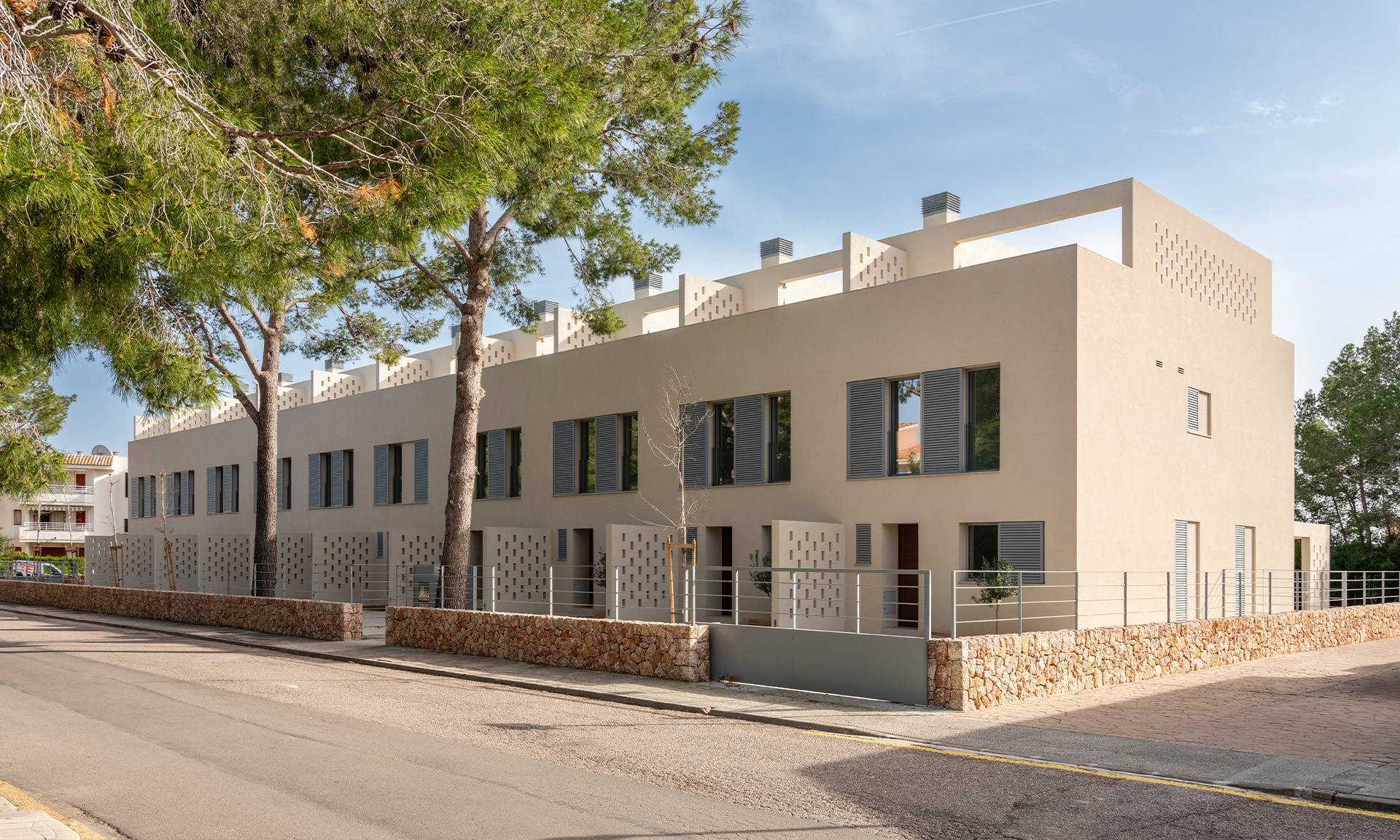
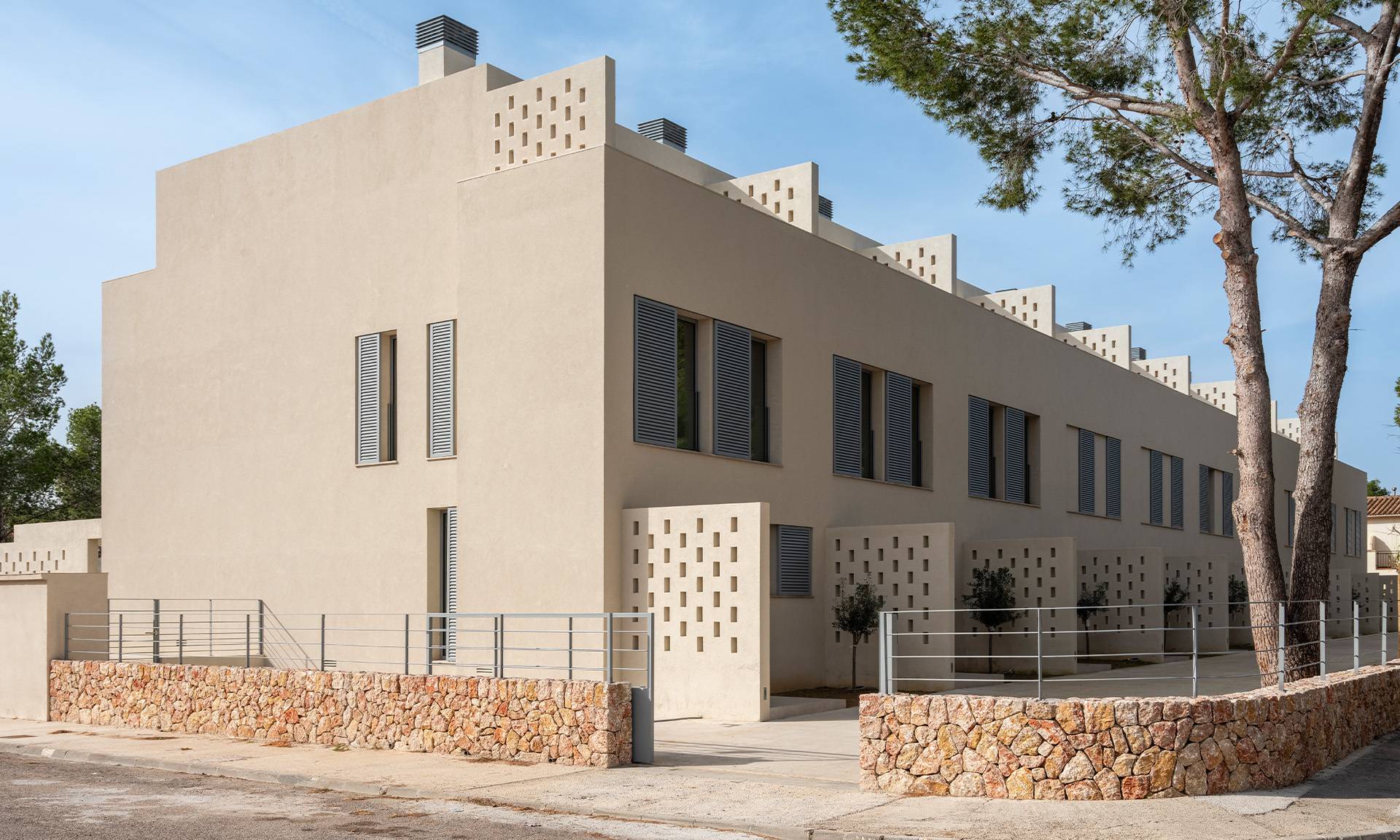
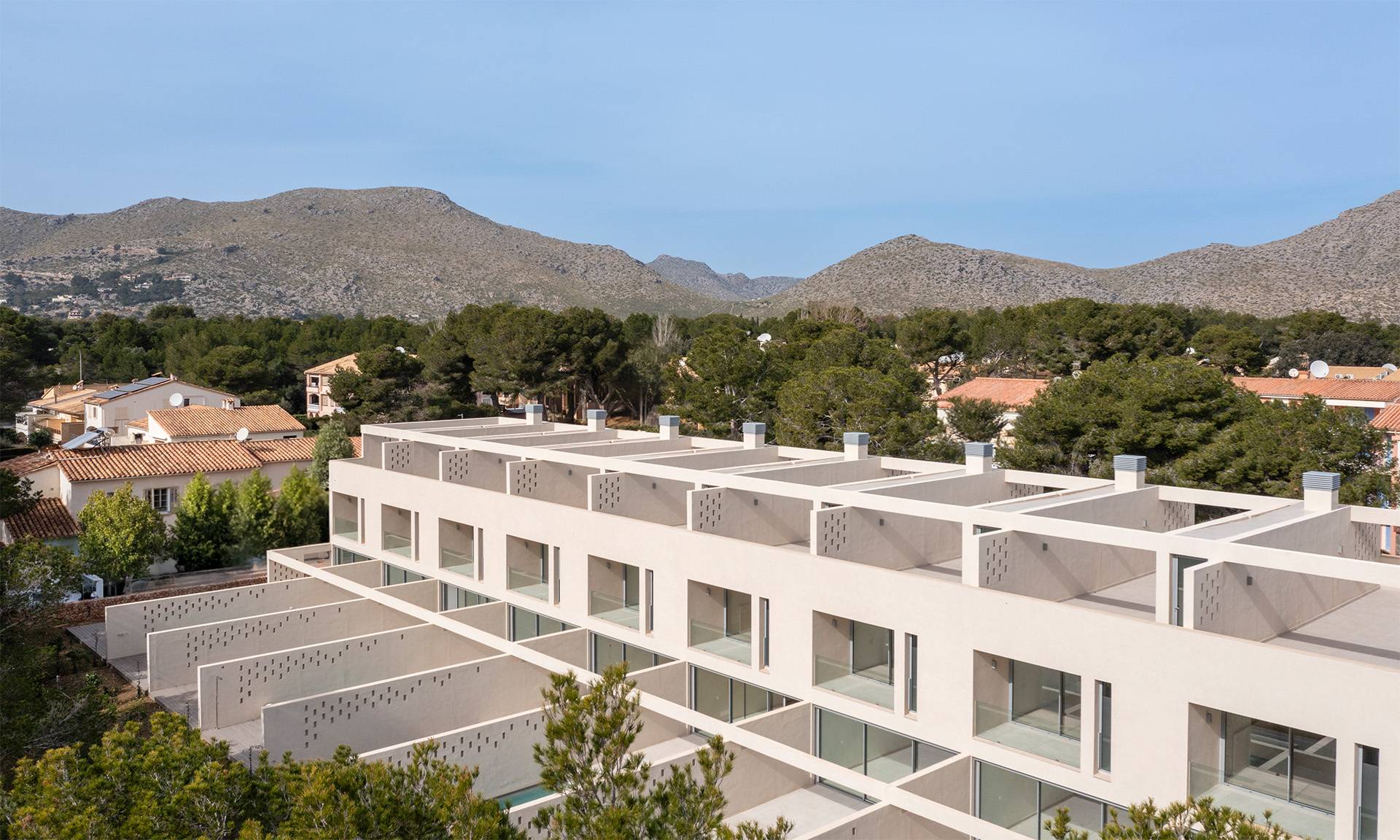
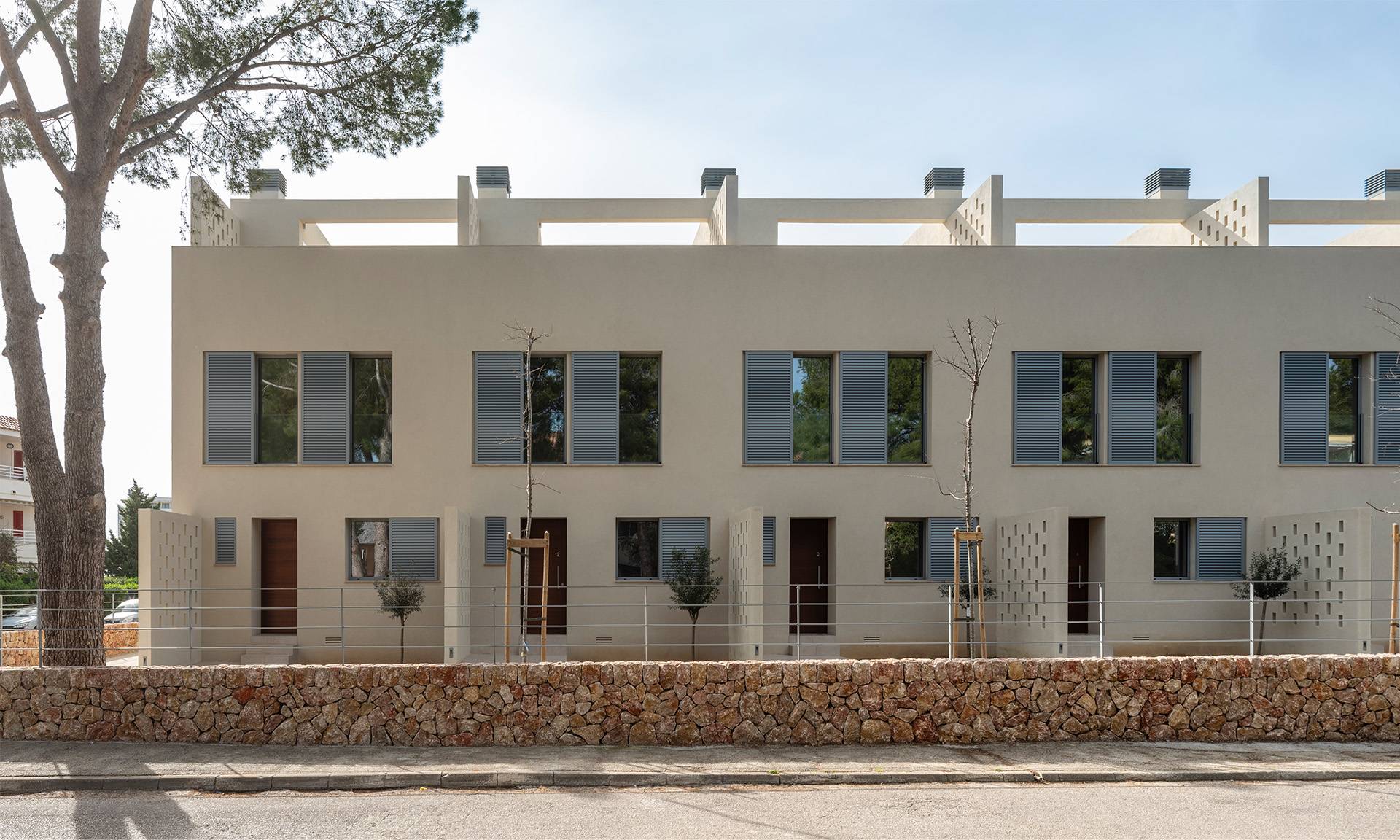
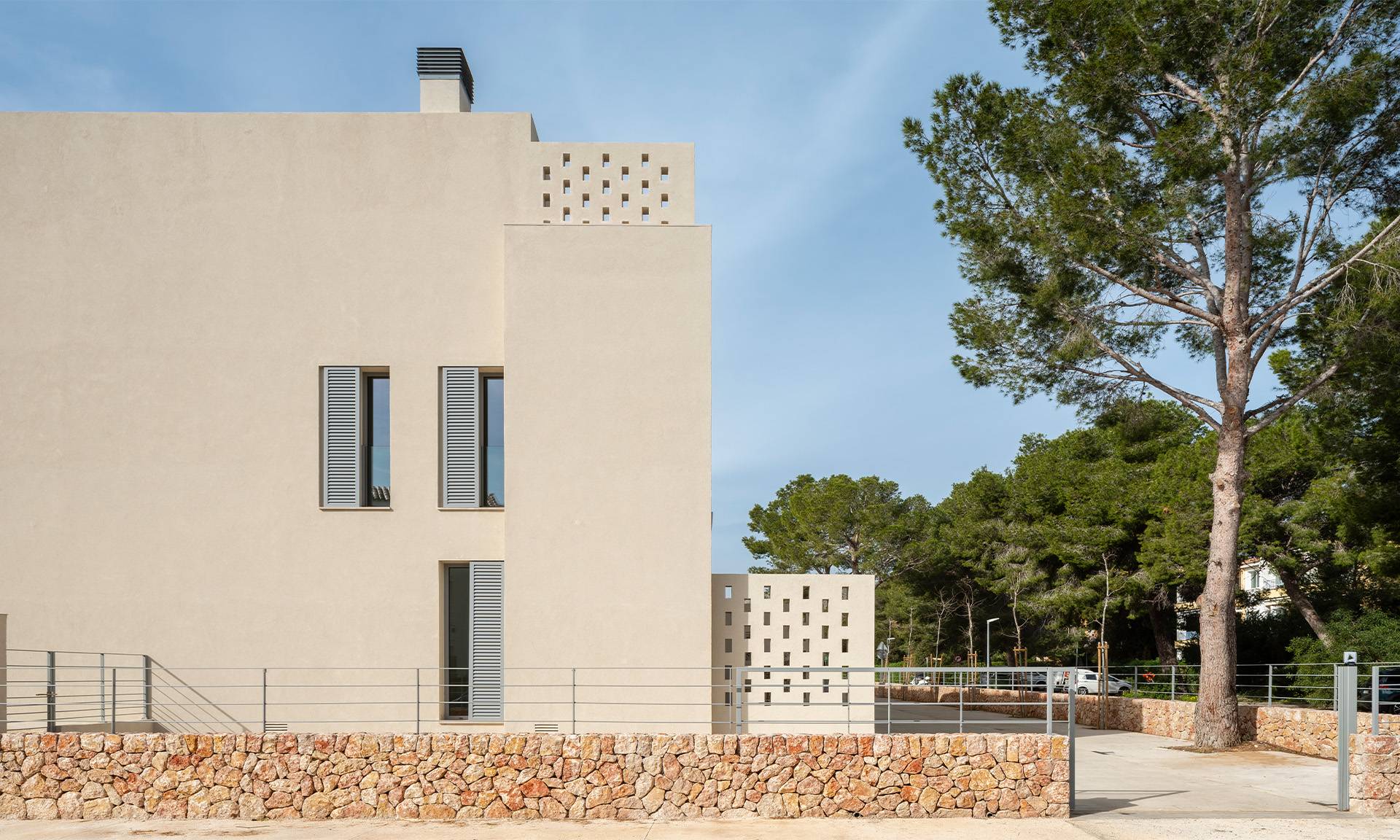
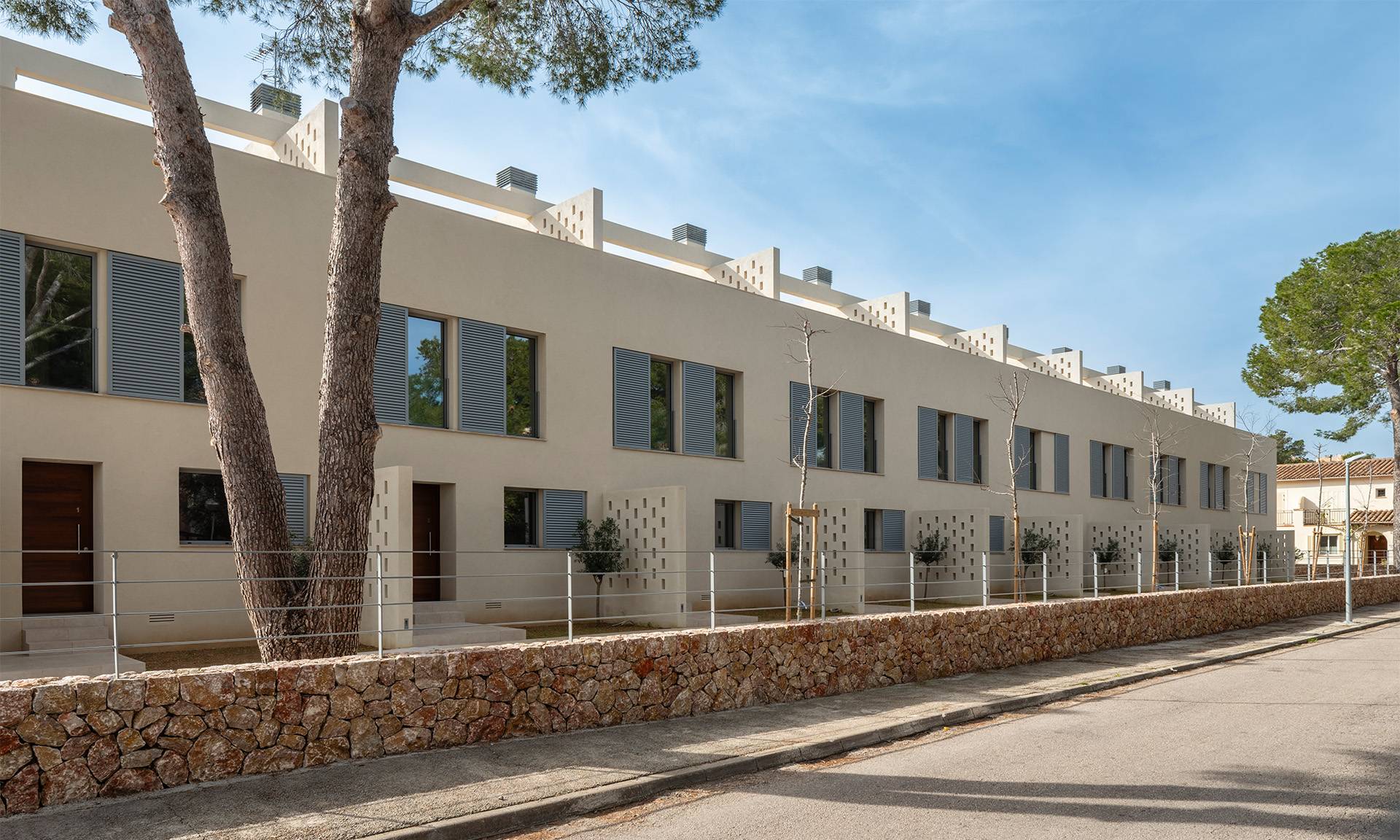
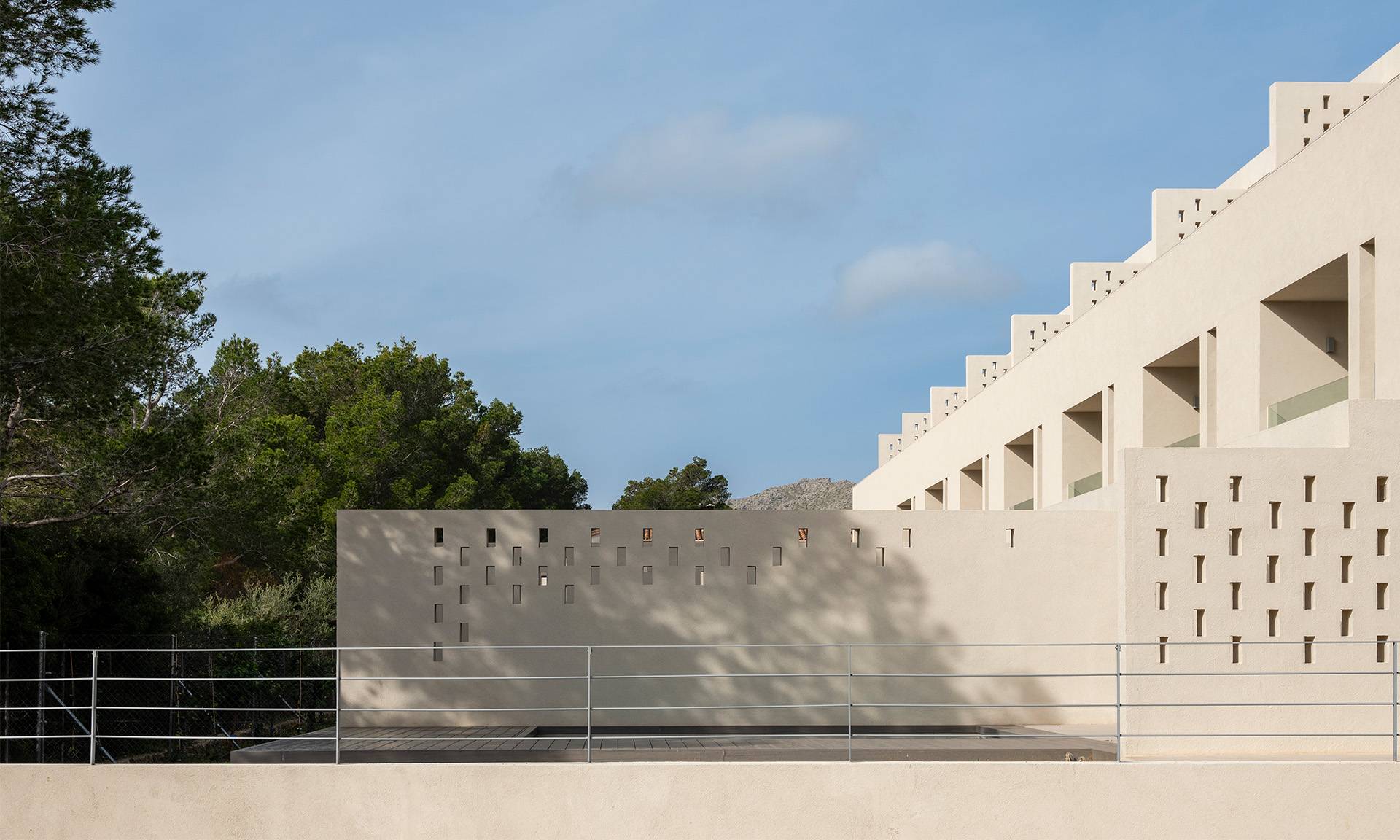
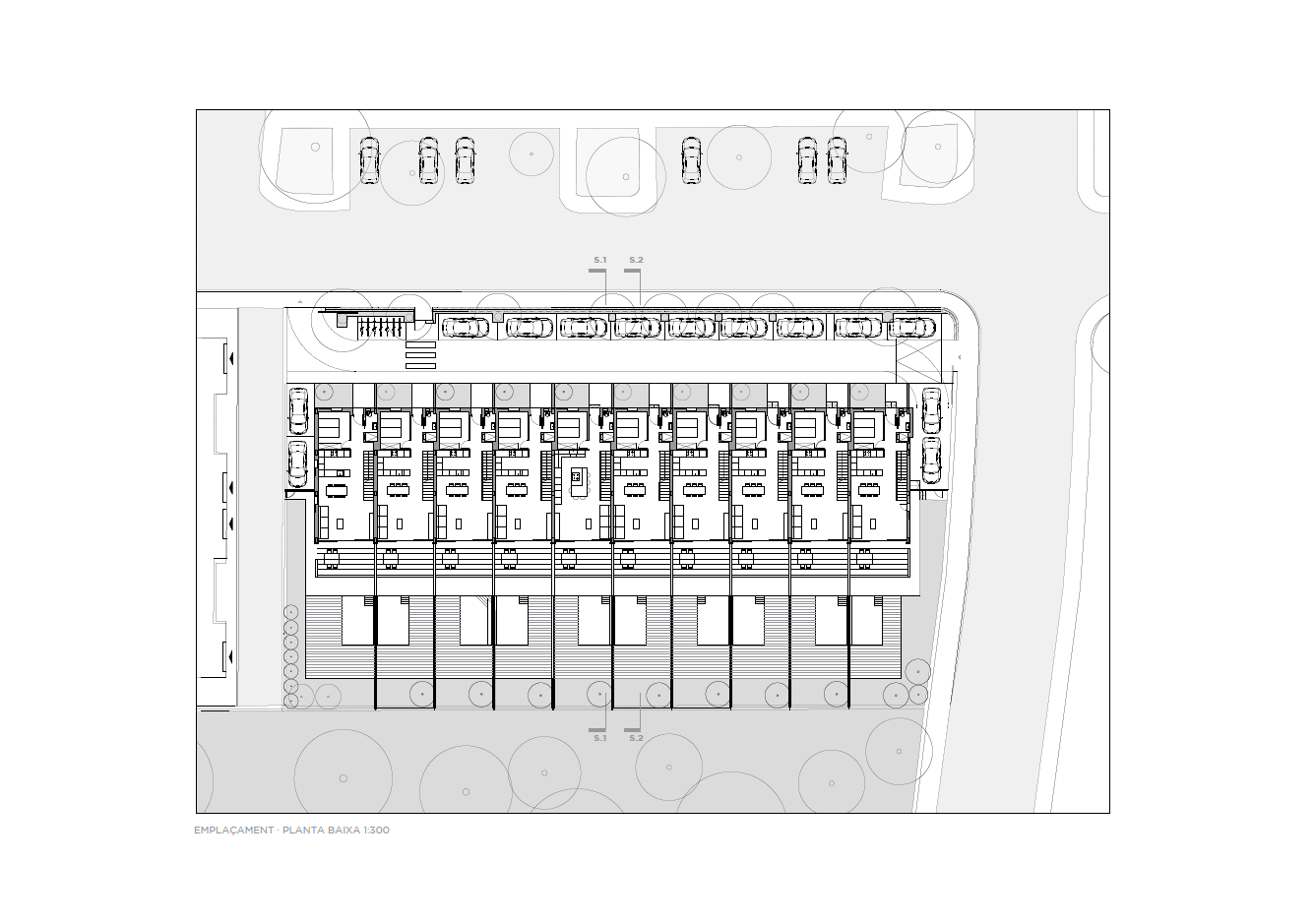
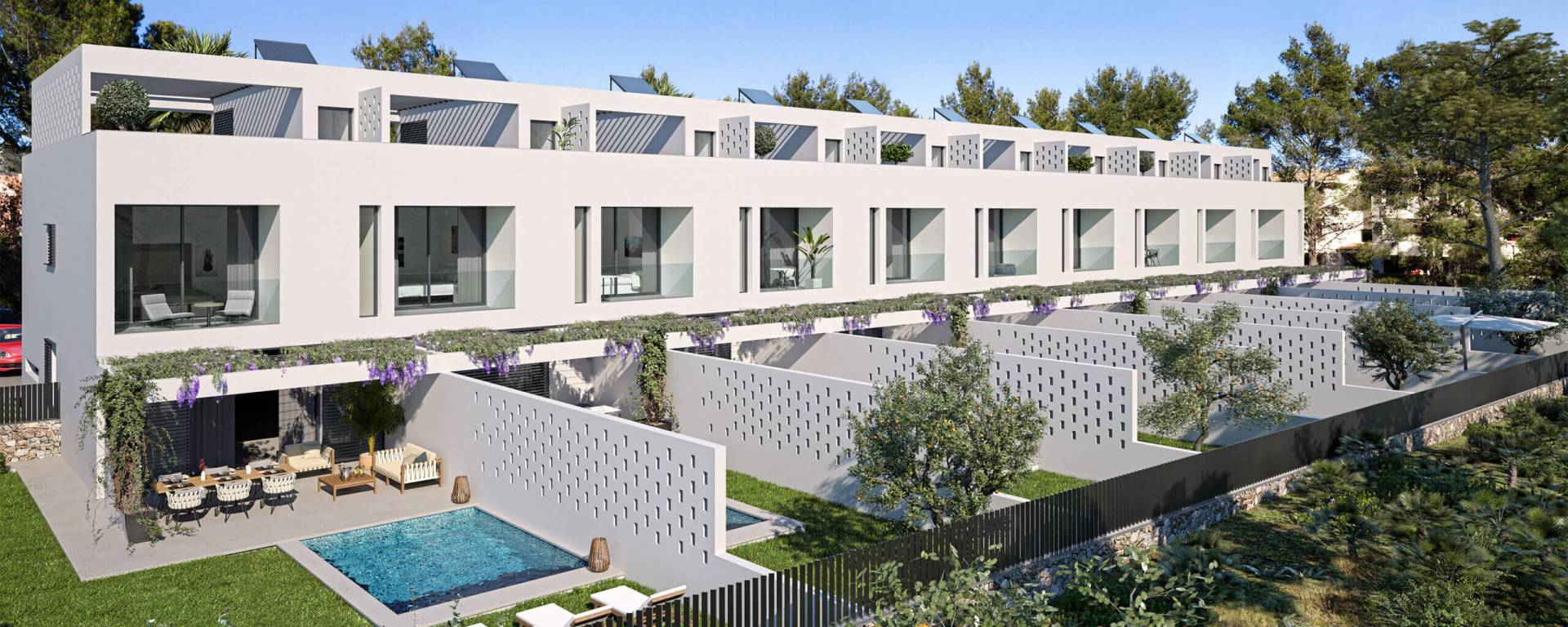
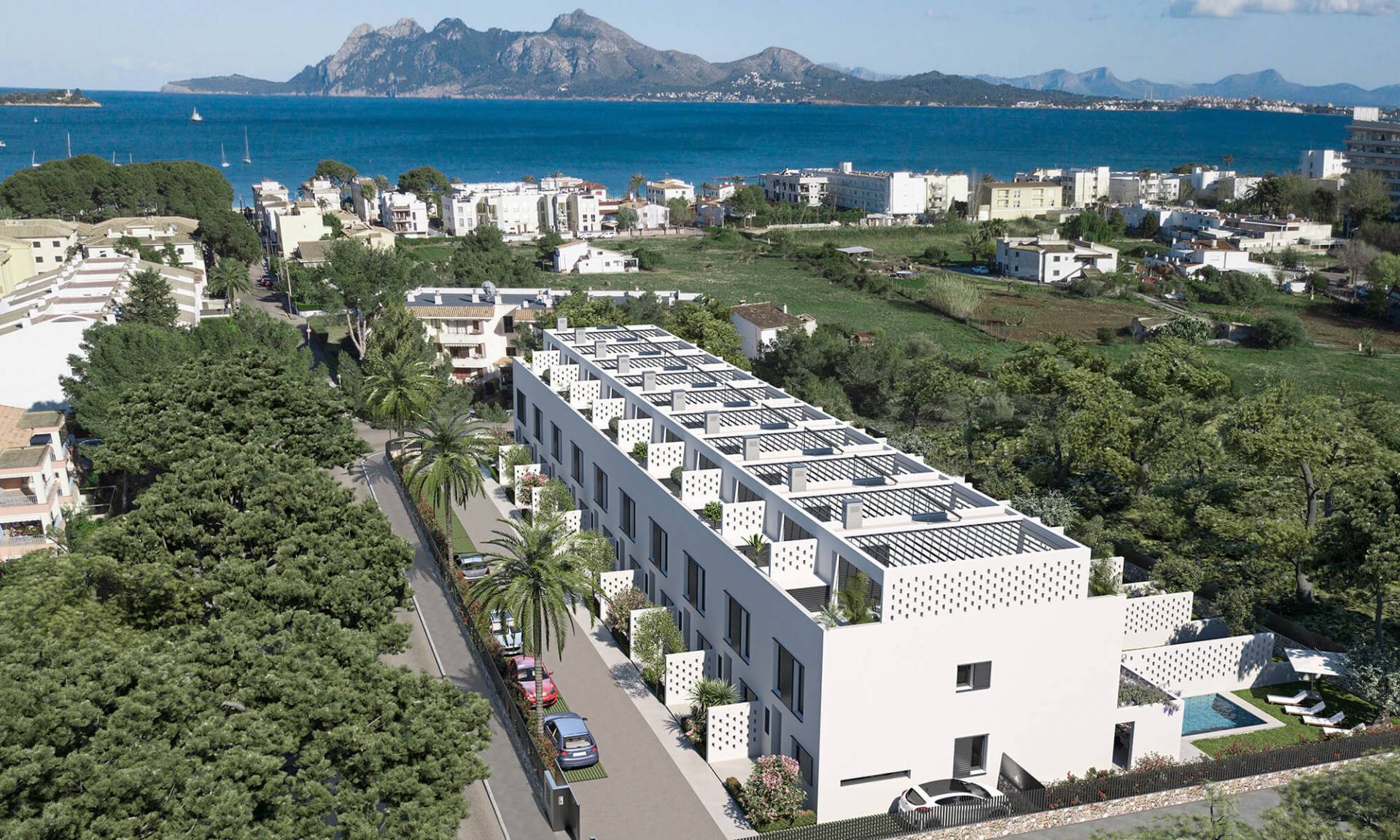
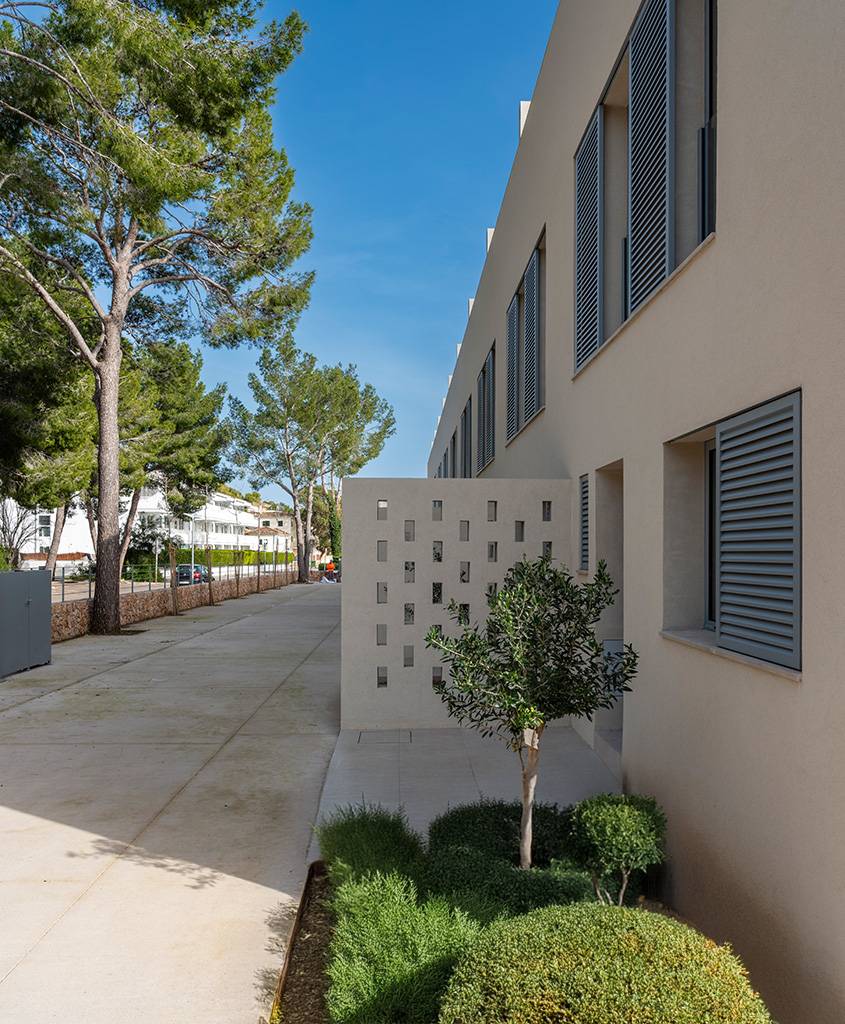
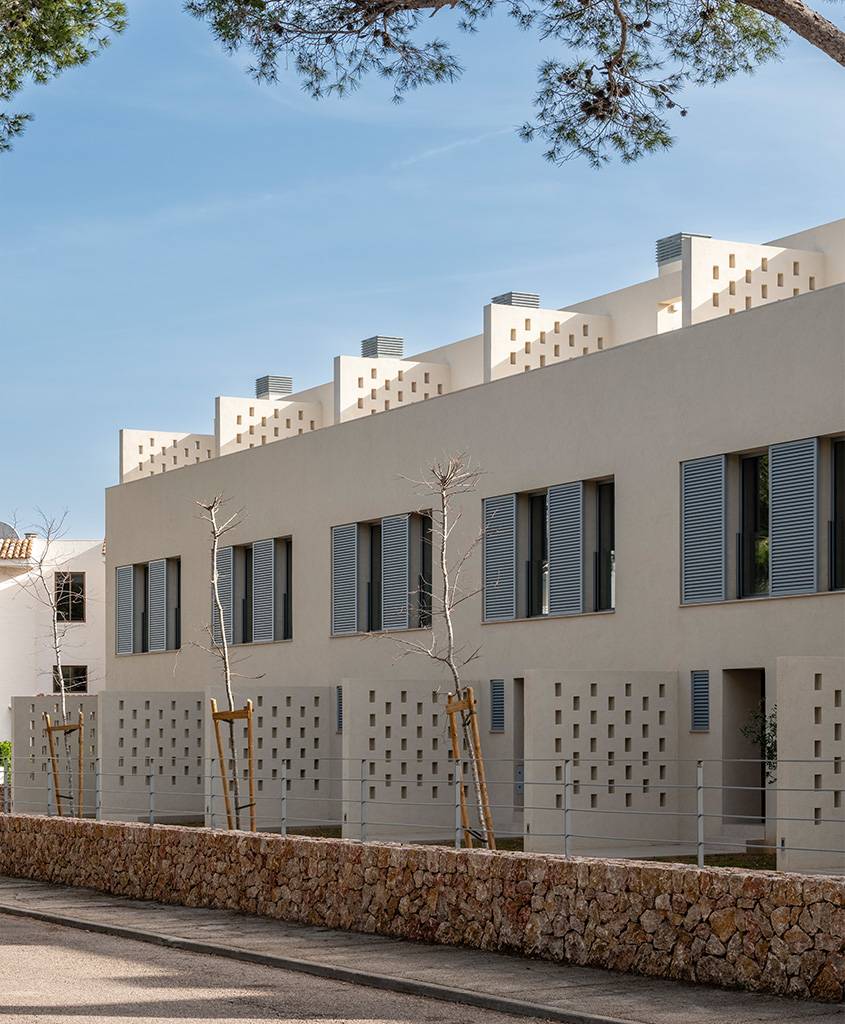
The project is located in Port de Pollensa, within the Es Pinaret area in Mallorca, an environment defined by a protected pine forest that shapes the landscape identity of the place. The plot, set within a mixed urban fabric - residential, tourist, and hotel-related - and in the fourth line from the sea, hosts a group of ten terraced houses that engage with the context through integration, orientation, sustainability, and a coherent architecture.
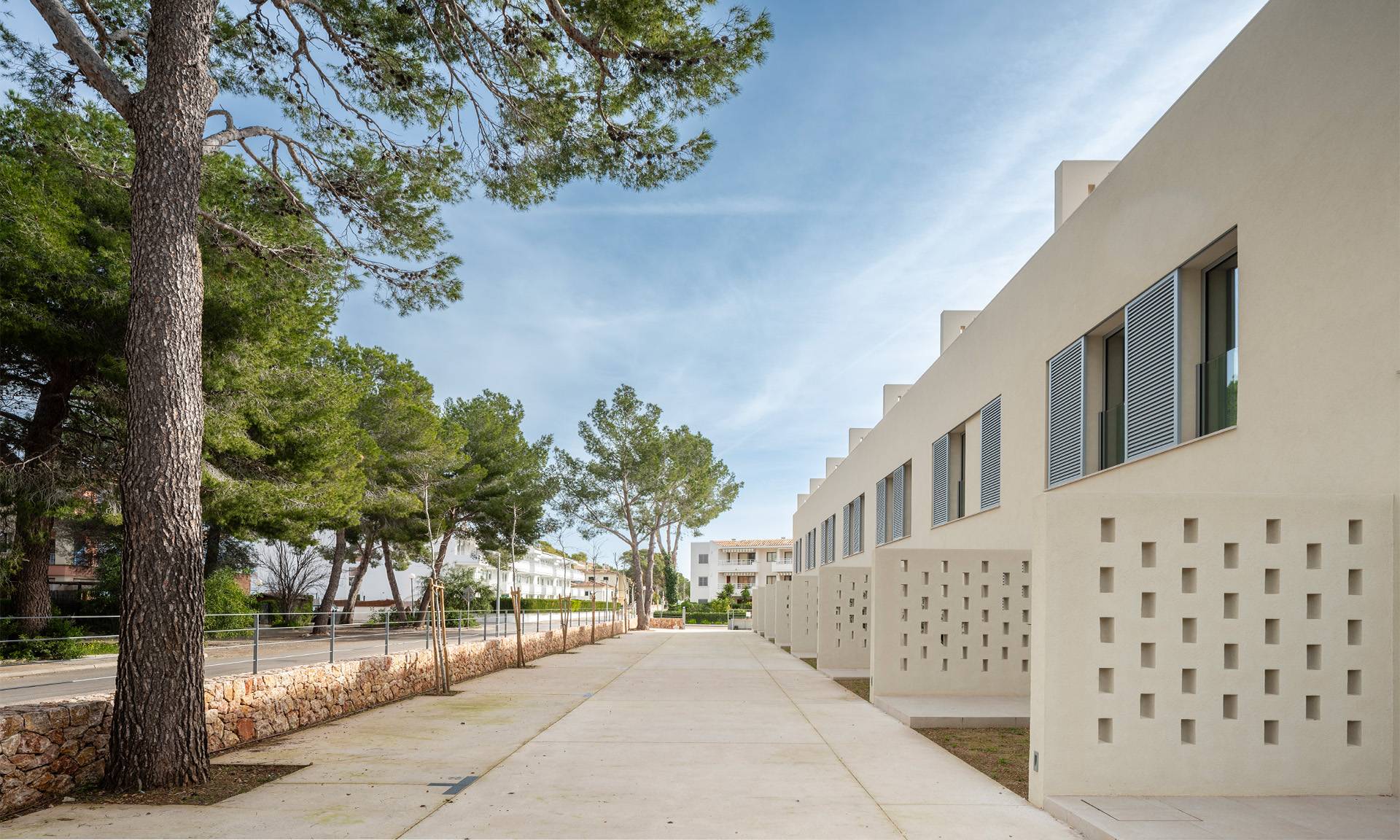
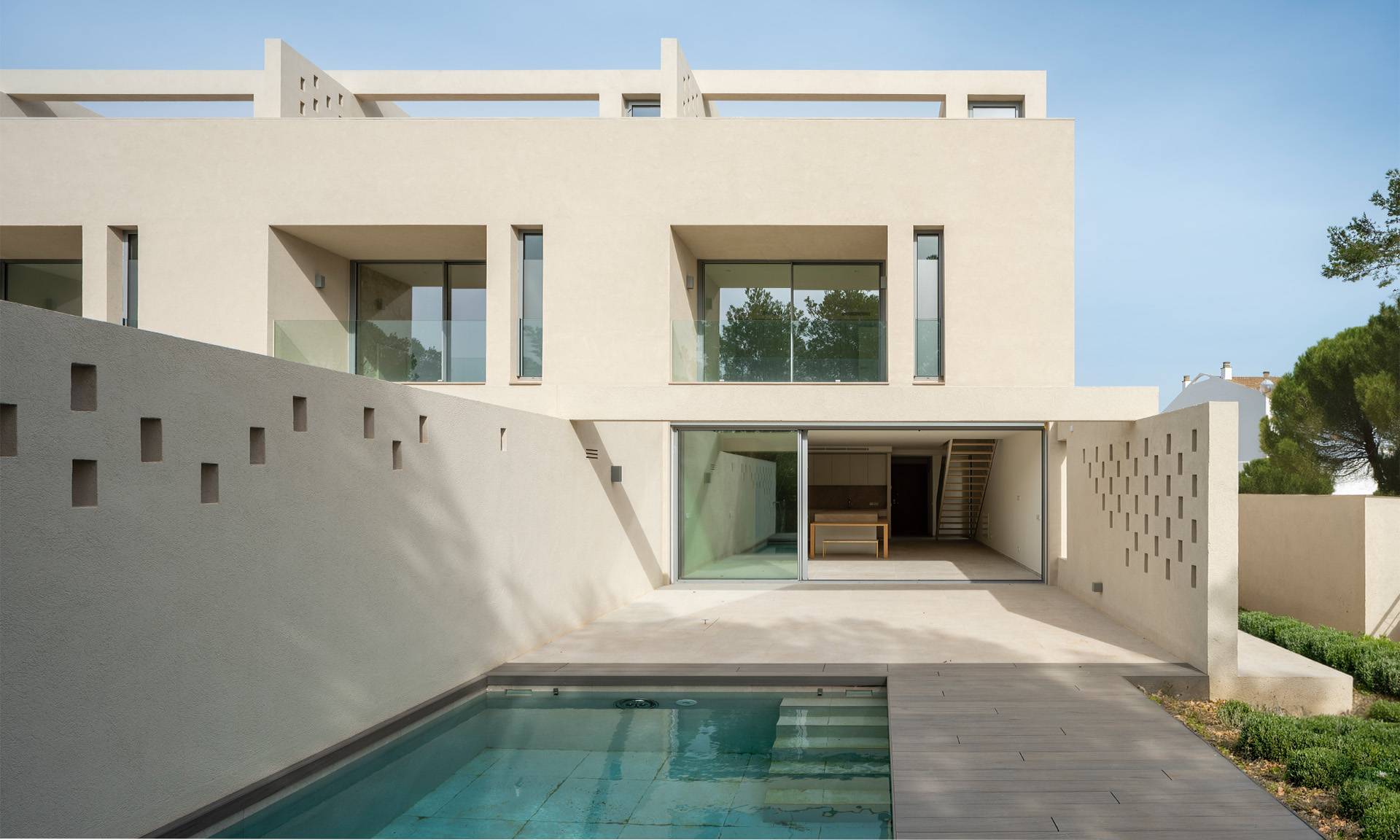
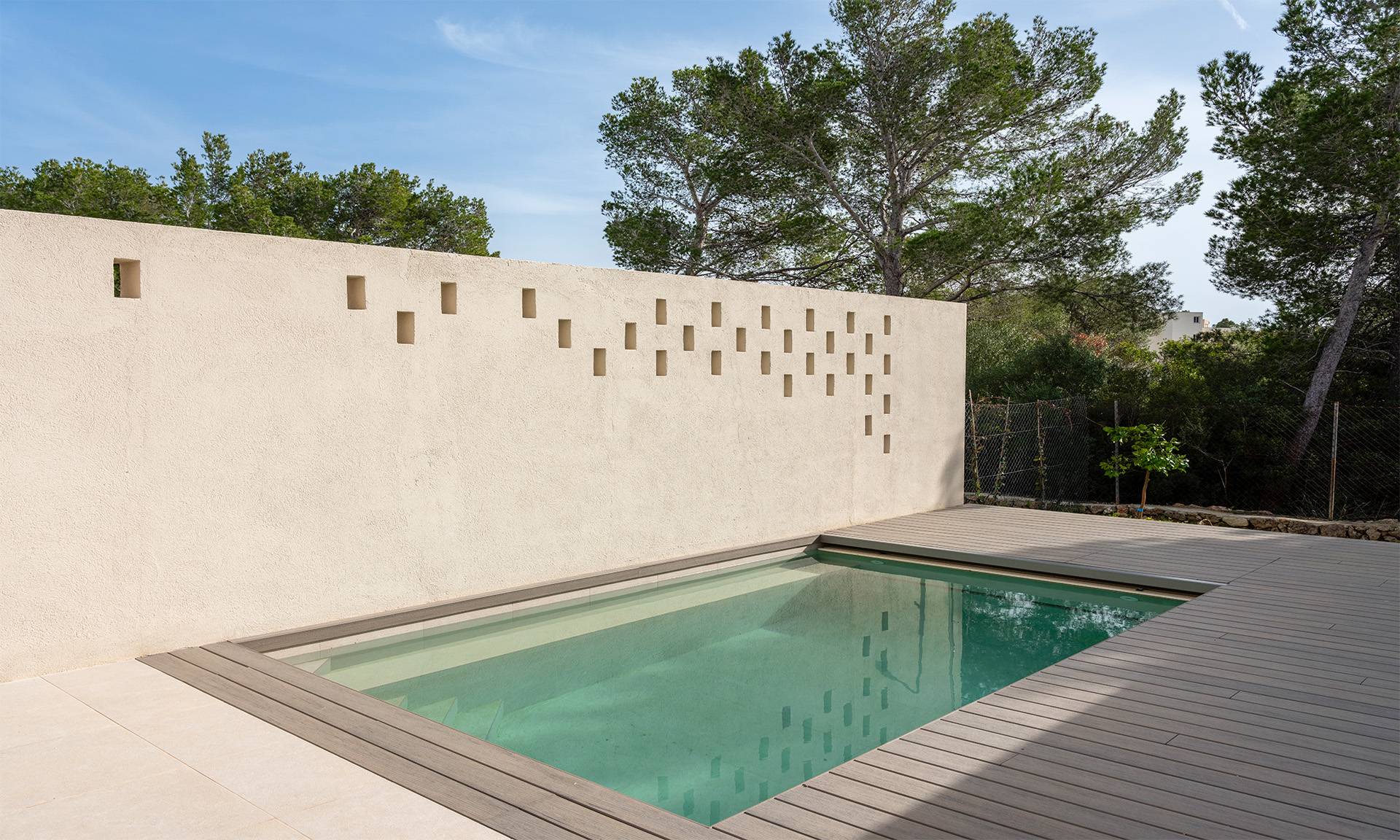
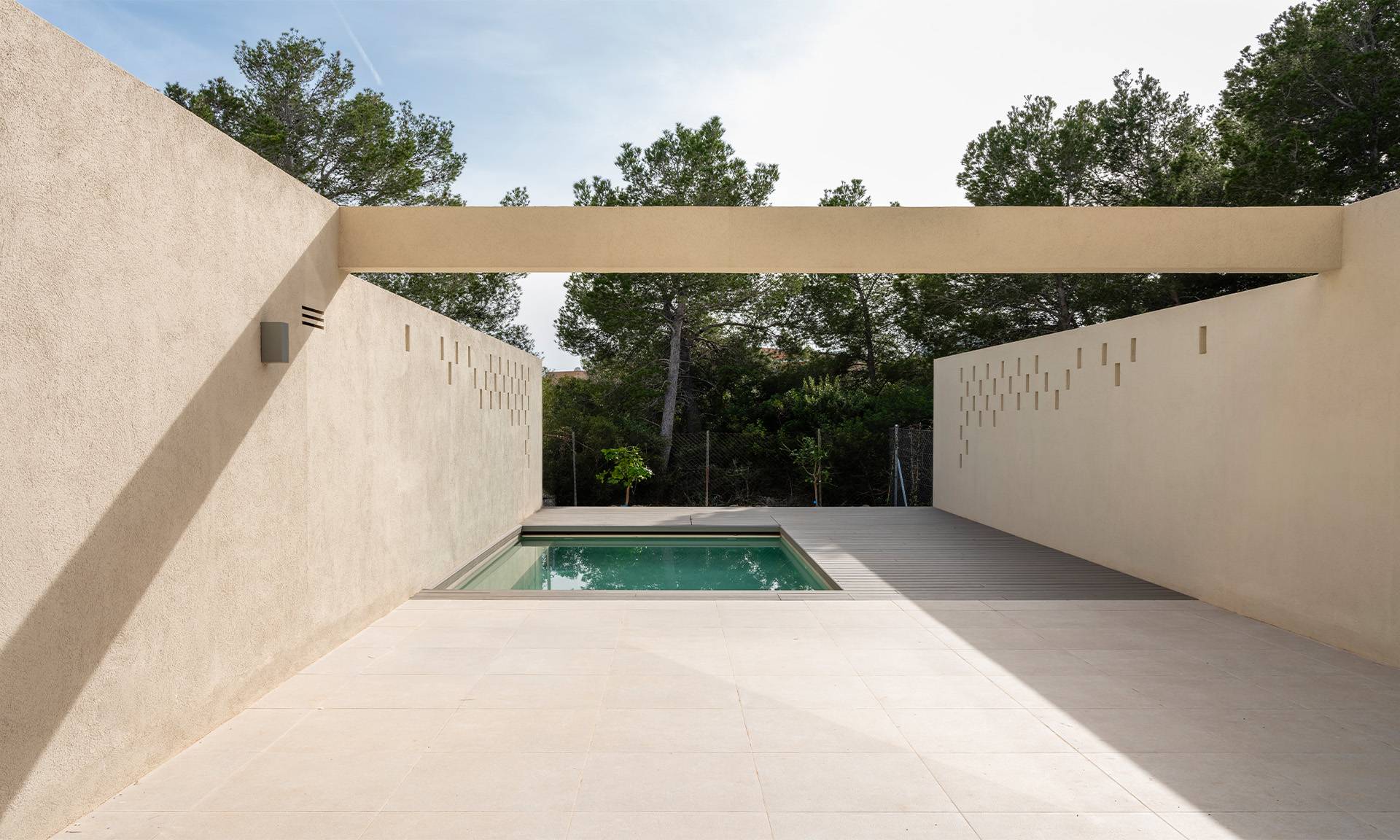
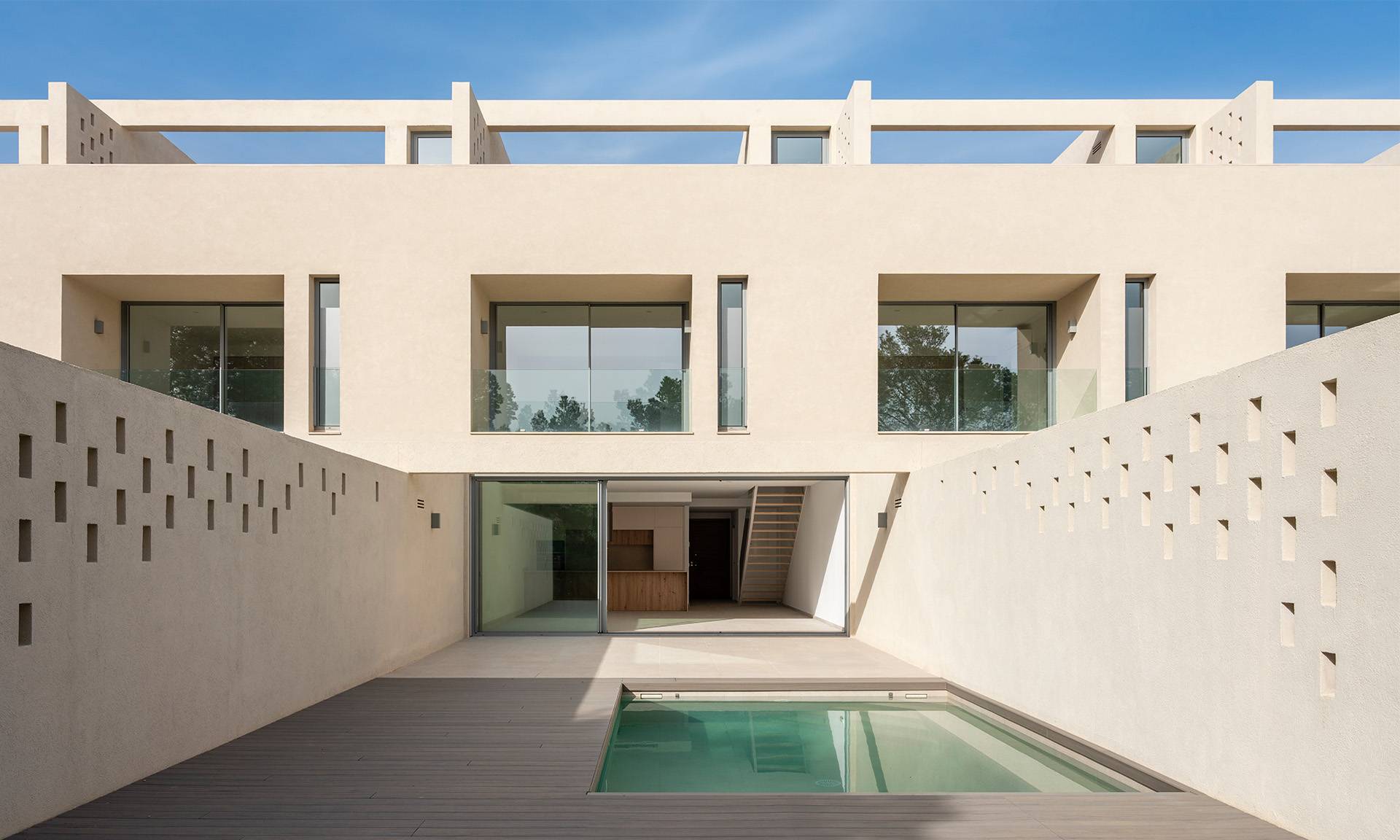
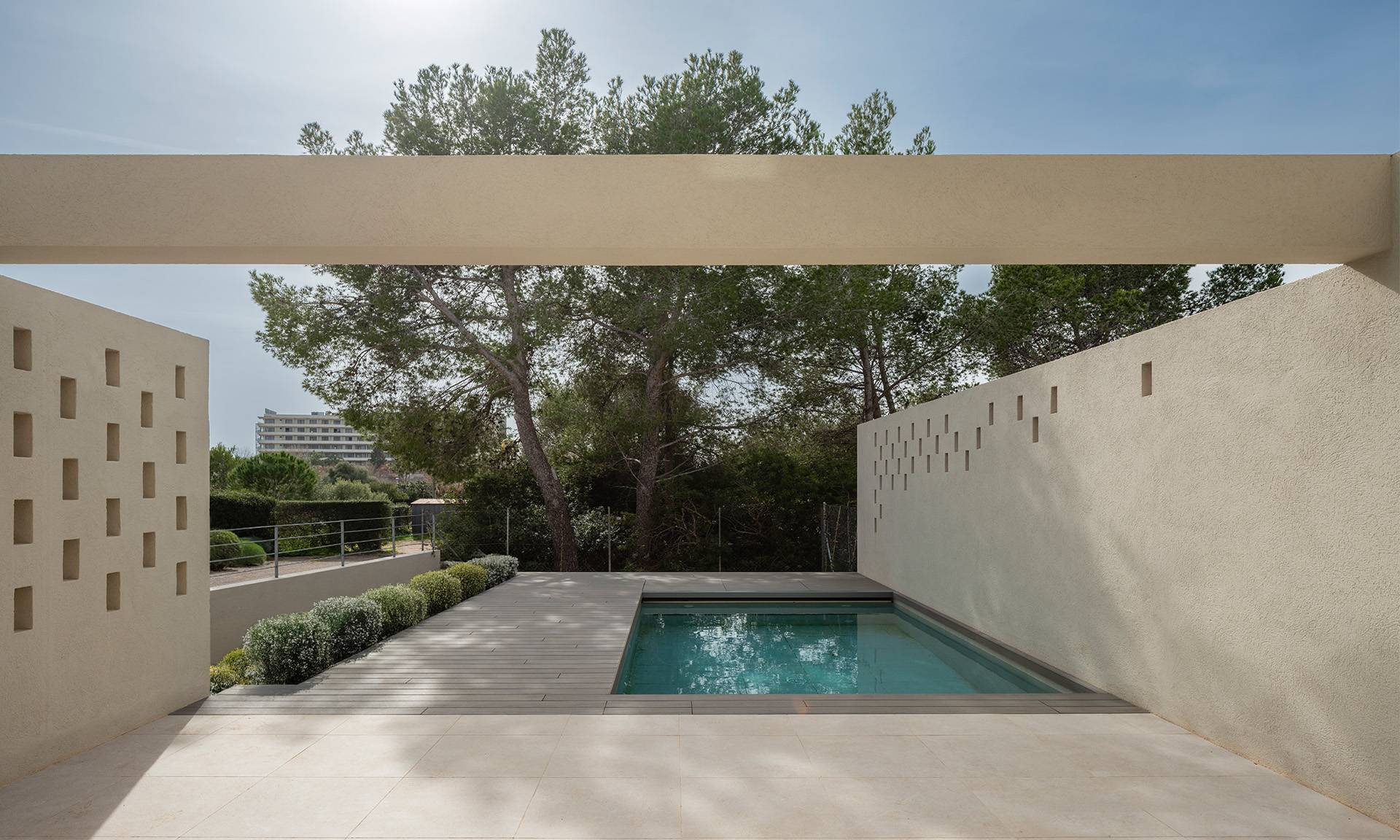
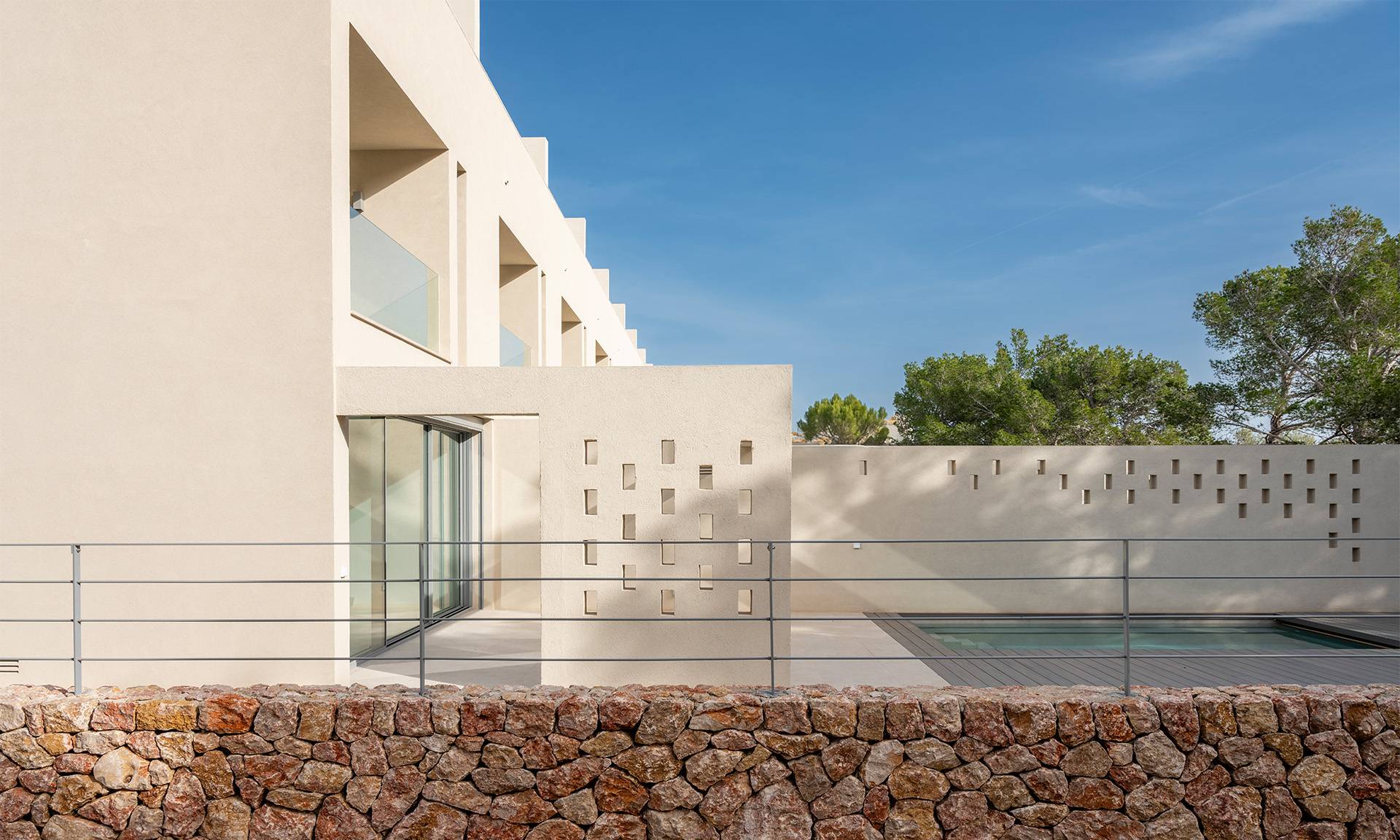
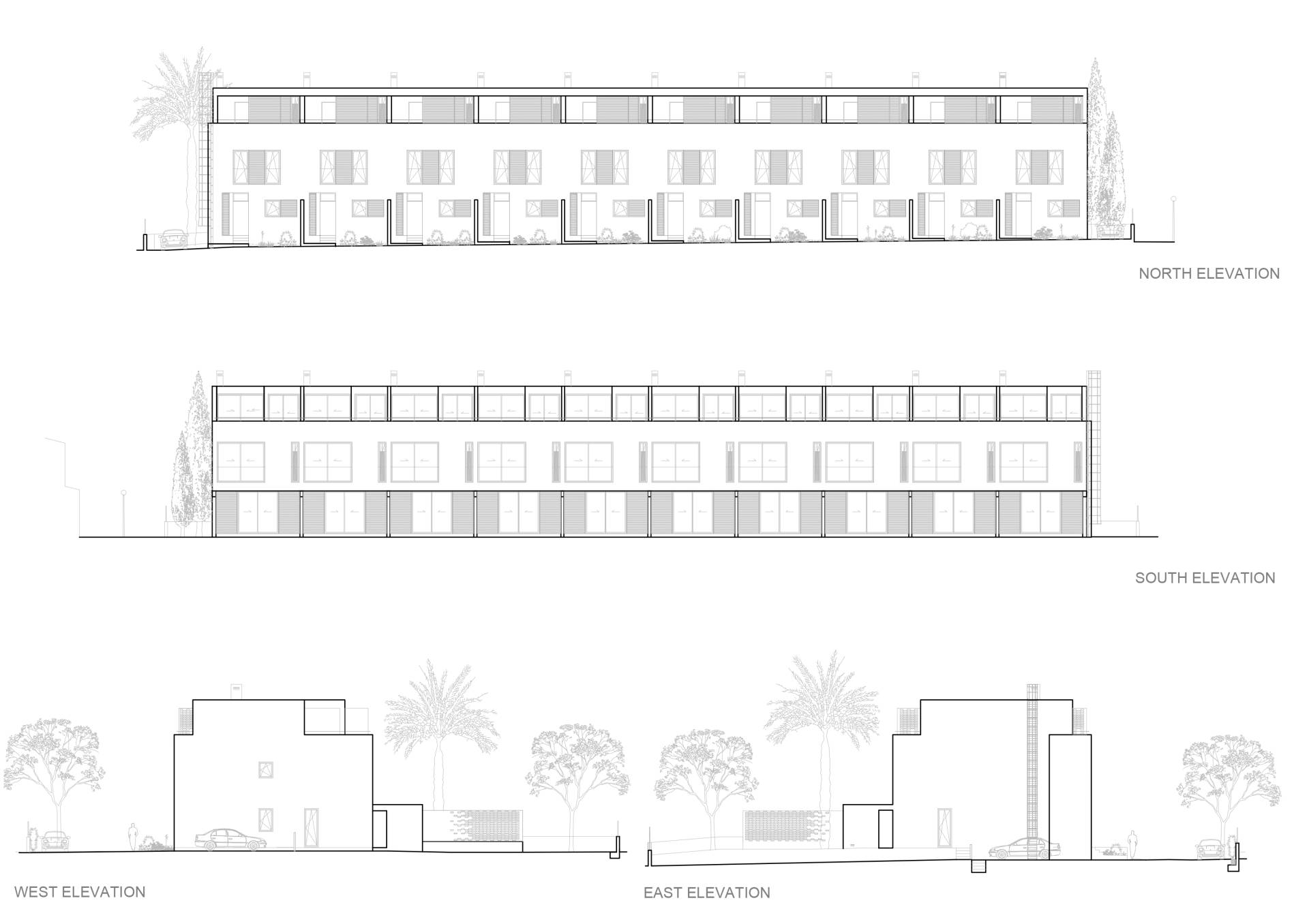
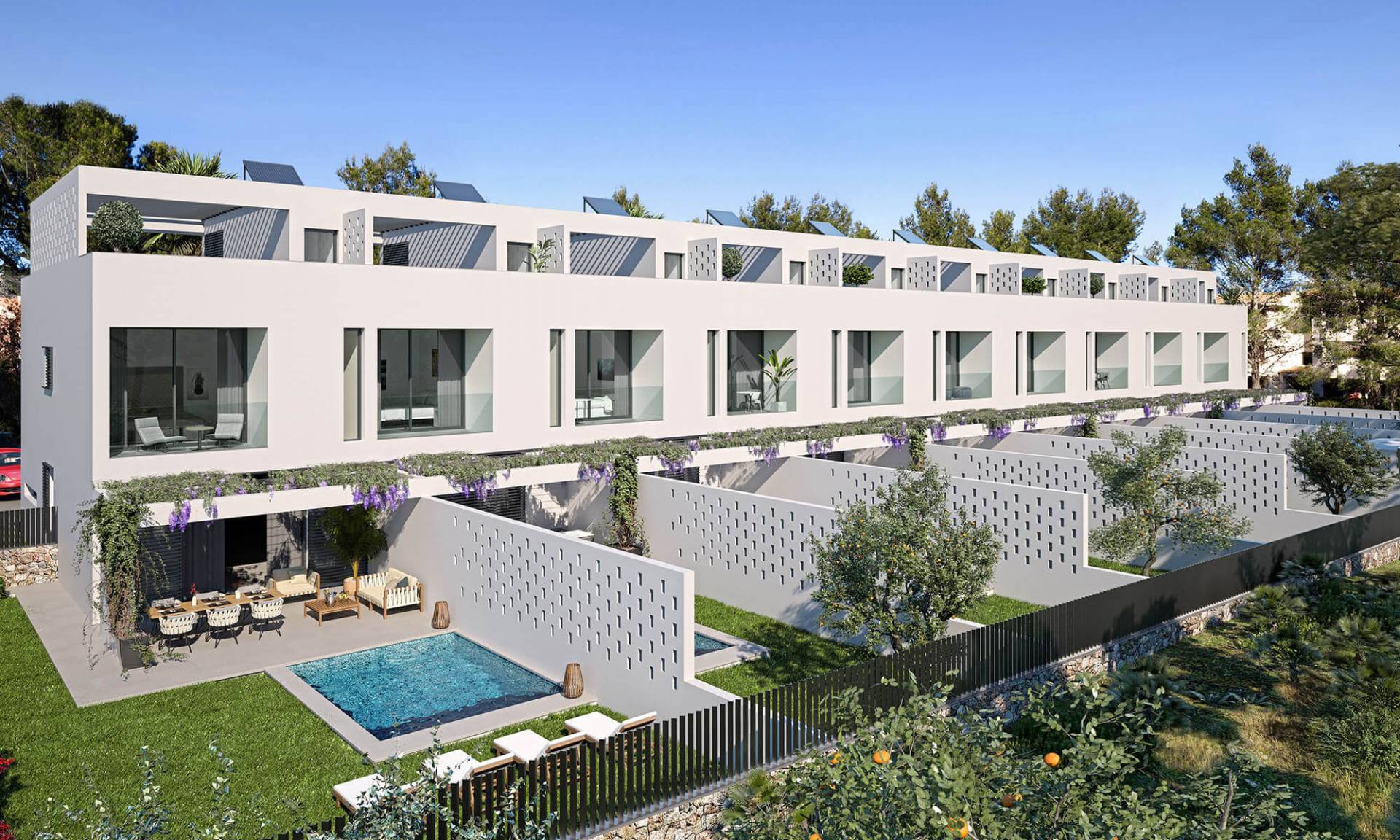
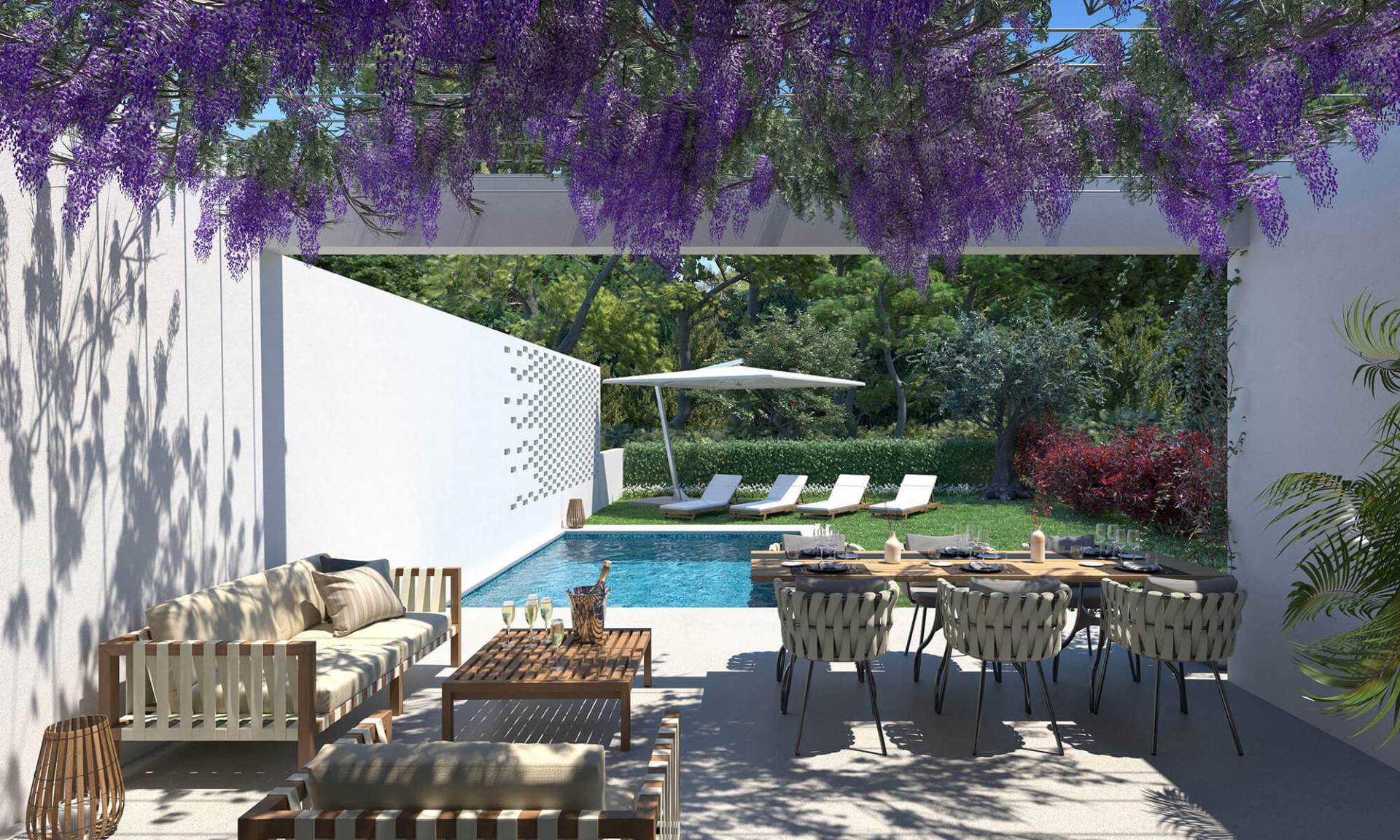
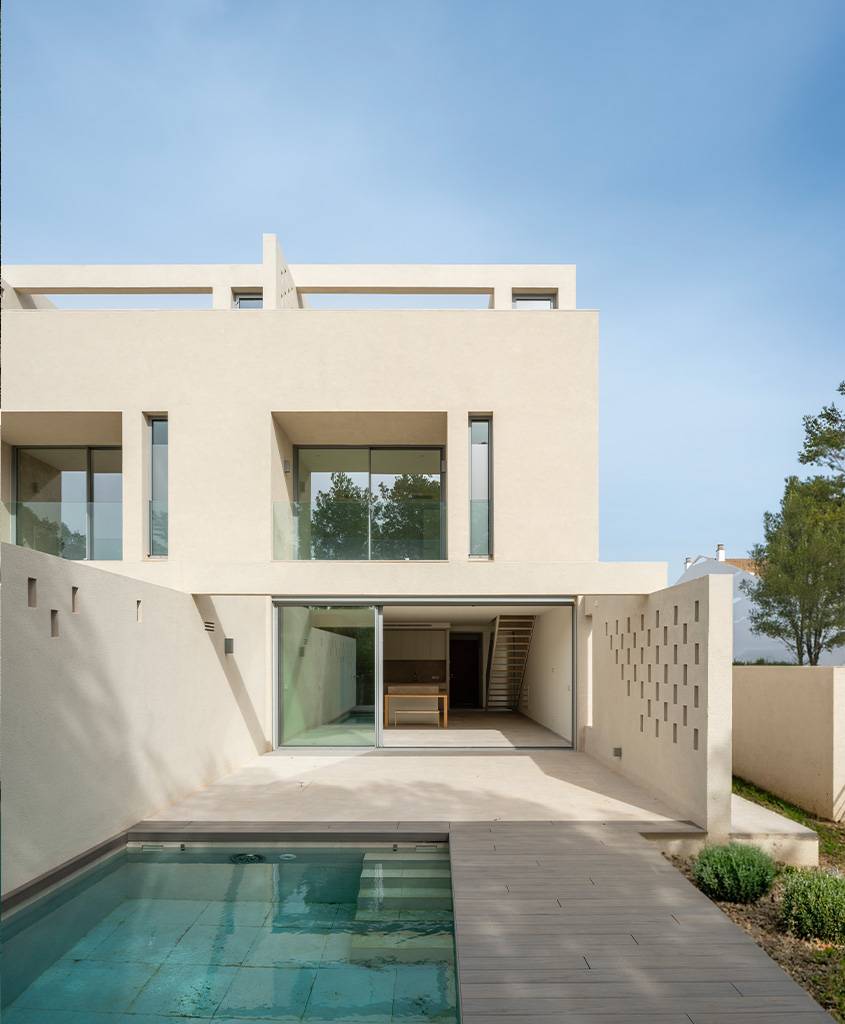
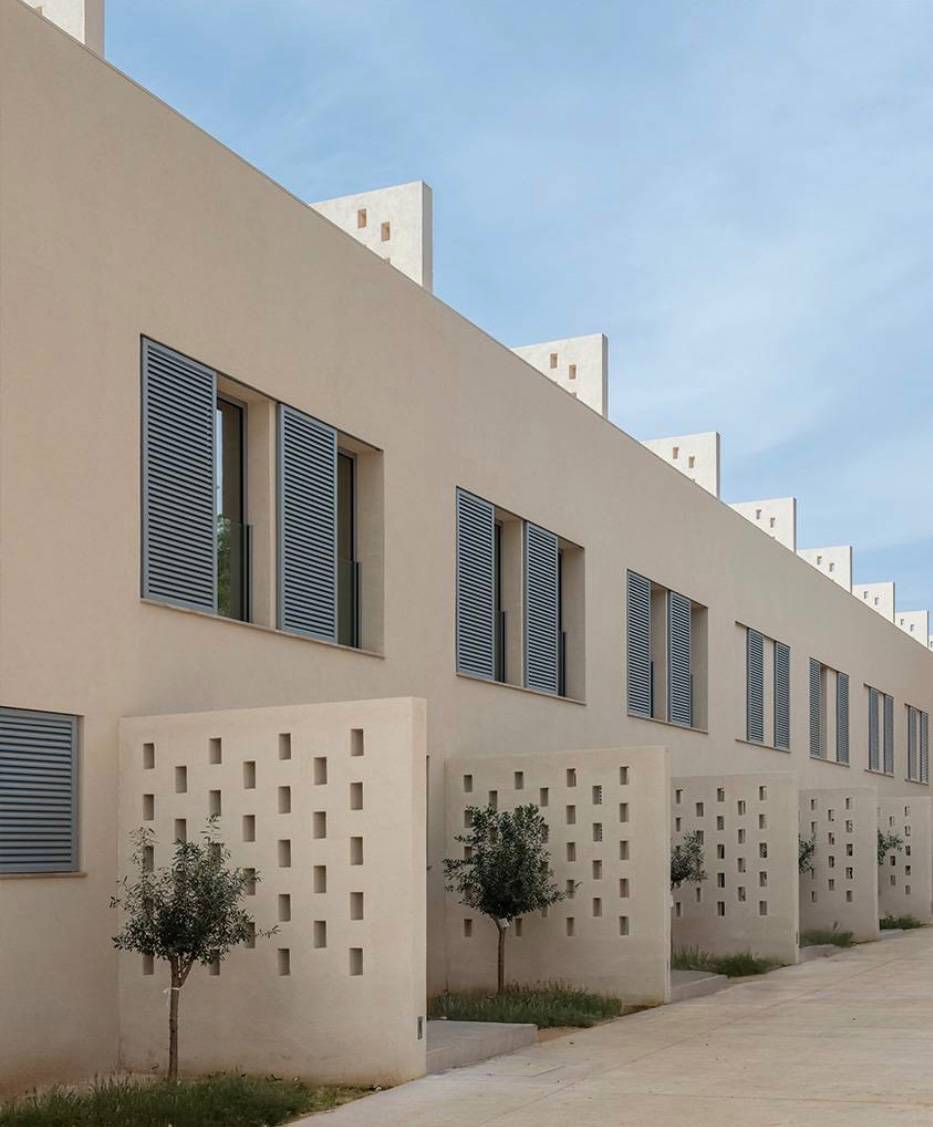
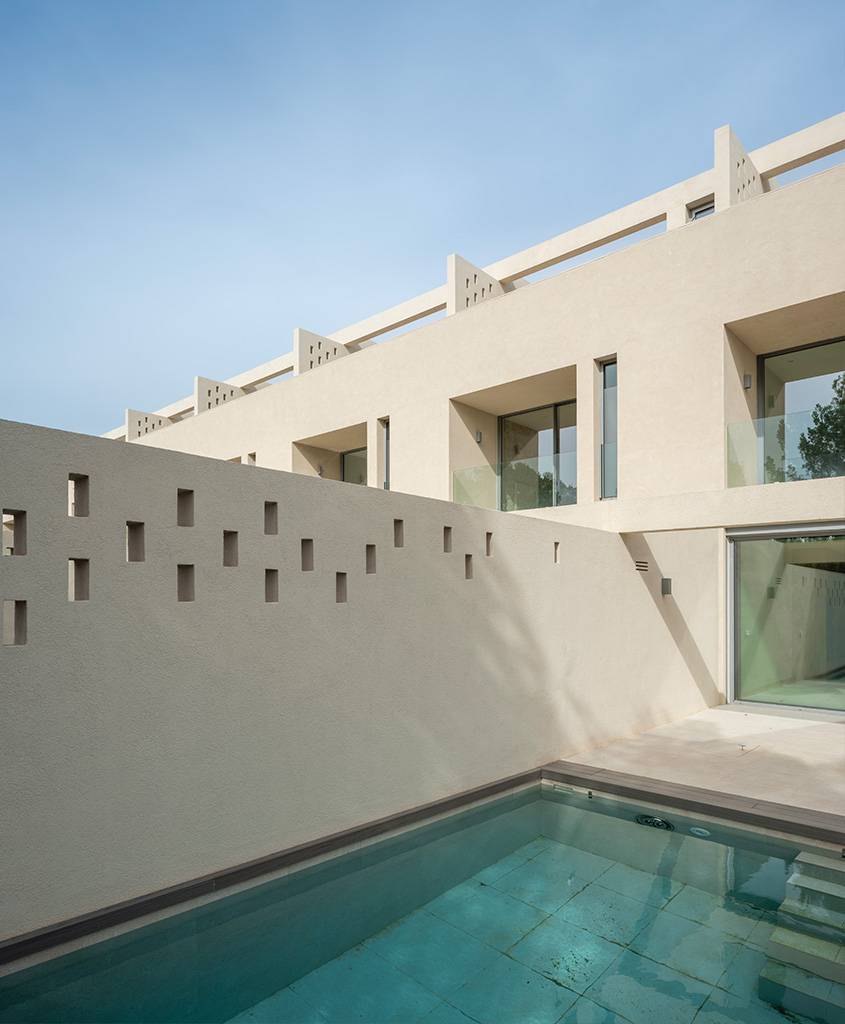
The proposal organizes the main spaces towards the south: living room, dining room, and kitchen, as well as terraces, pergolas, pools, and gardens, conceived as a continuation of the interior. The north facade, with open patios, defines the transition between public and private space and accommodates access to each dwelling, creating a welcoming threshold and shaping the perception of the ensemble from the outset.
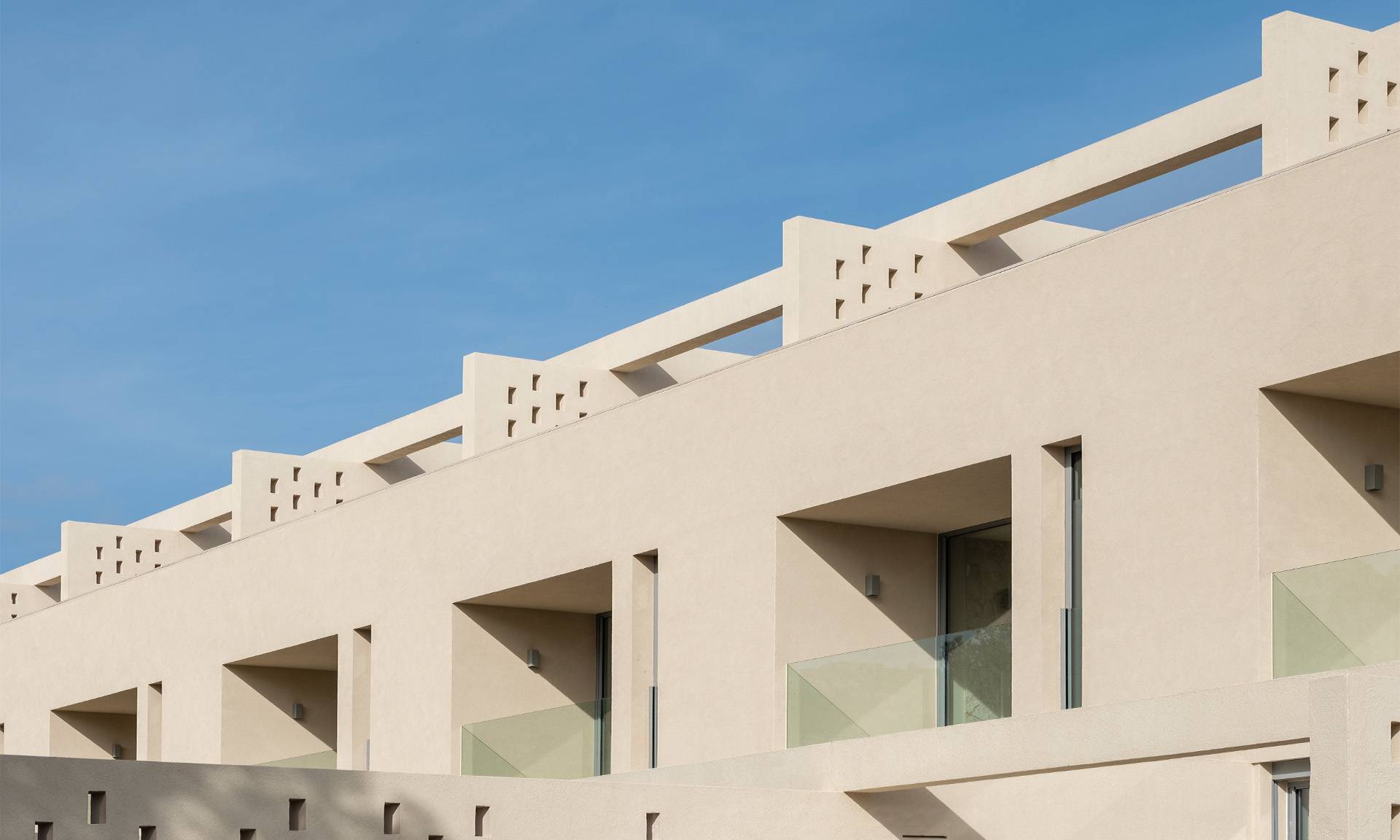
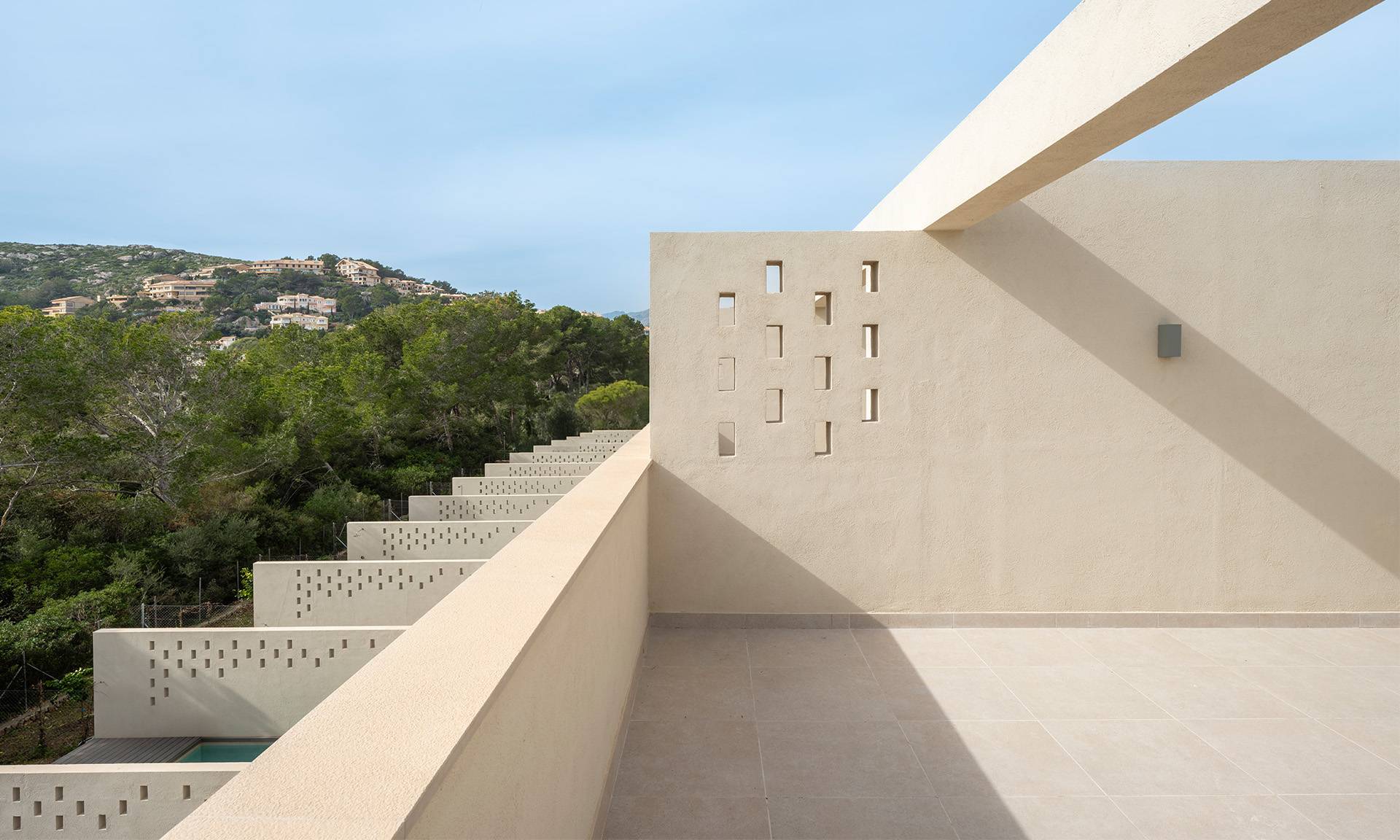
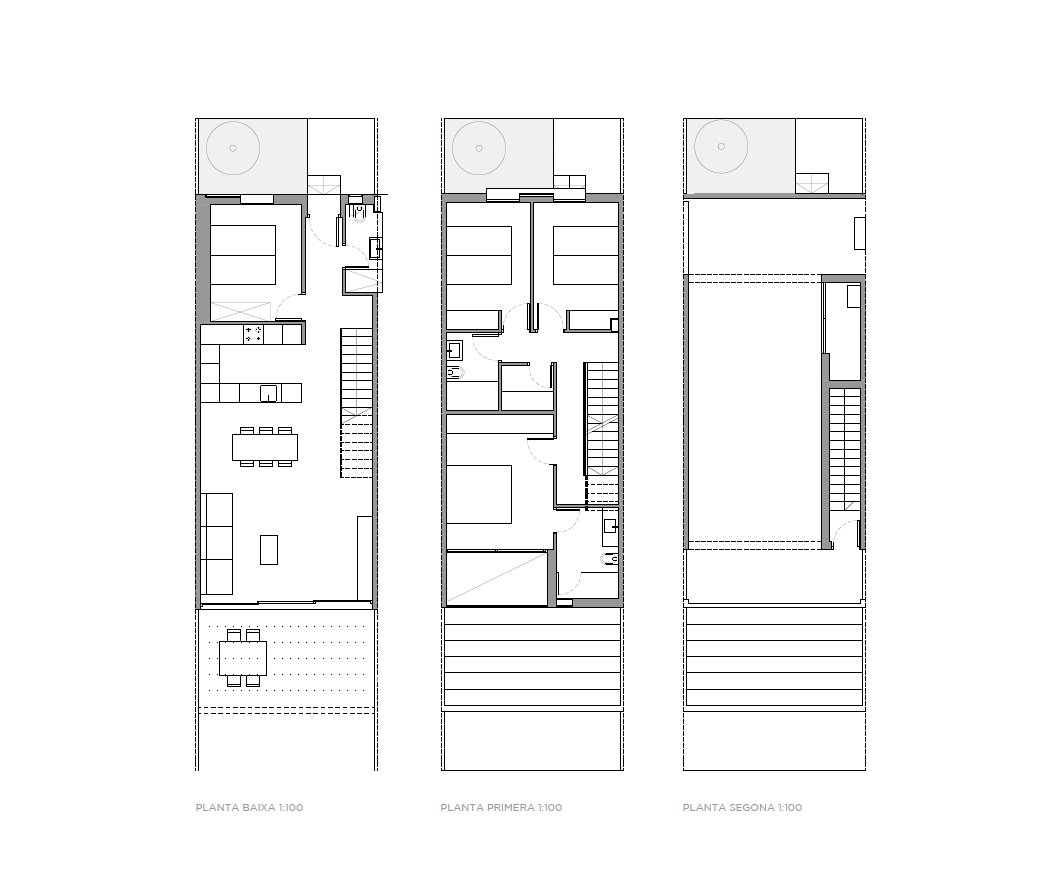
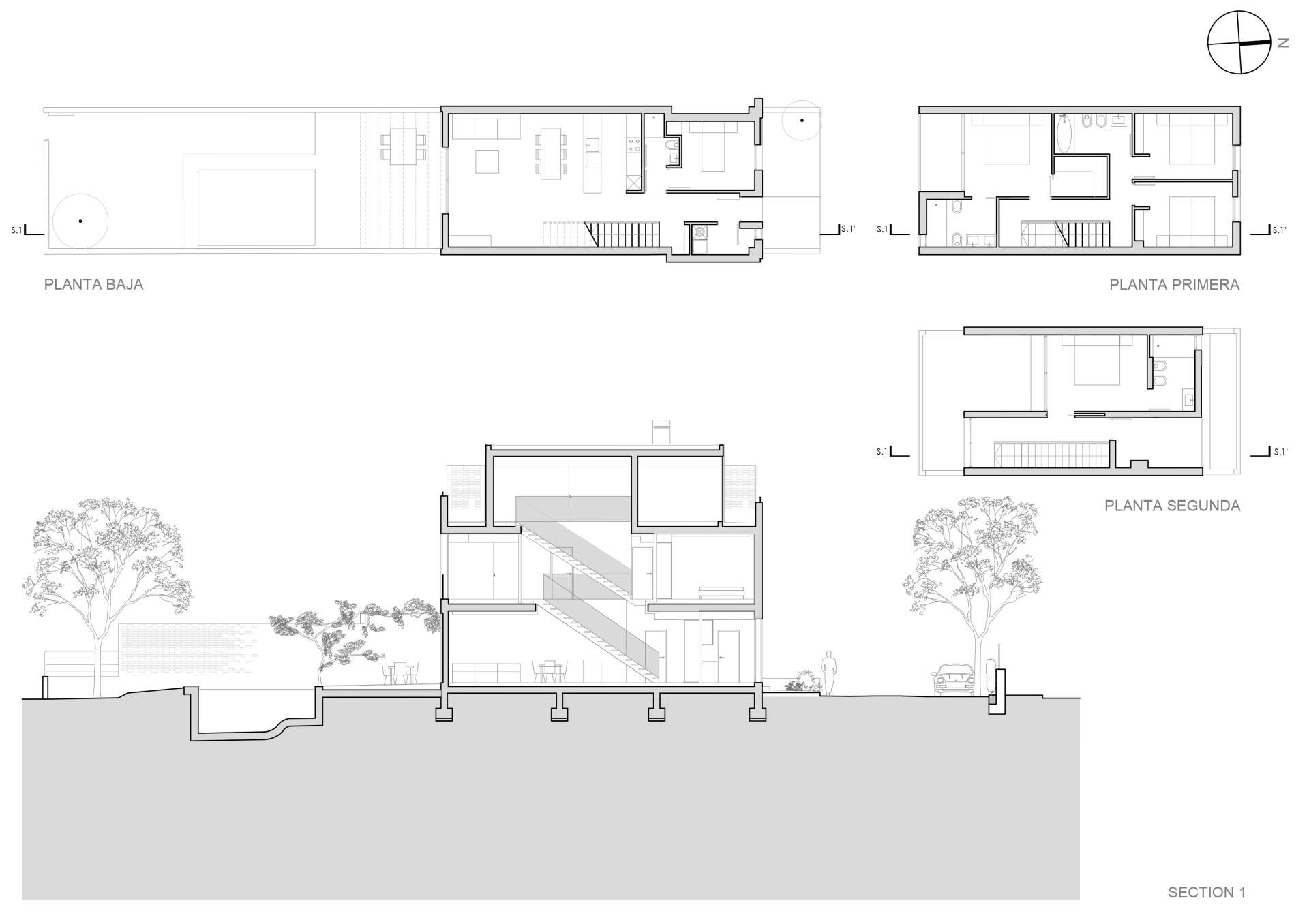
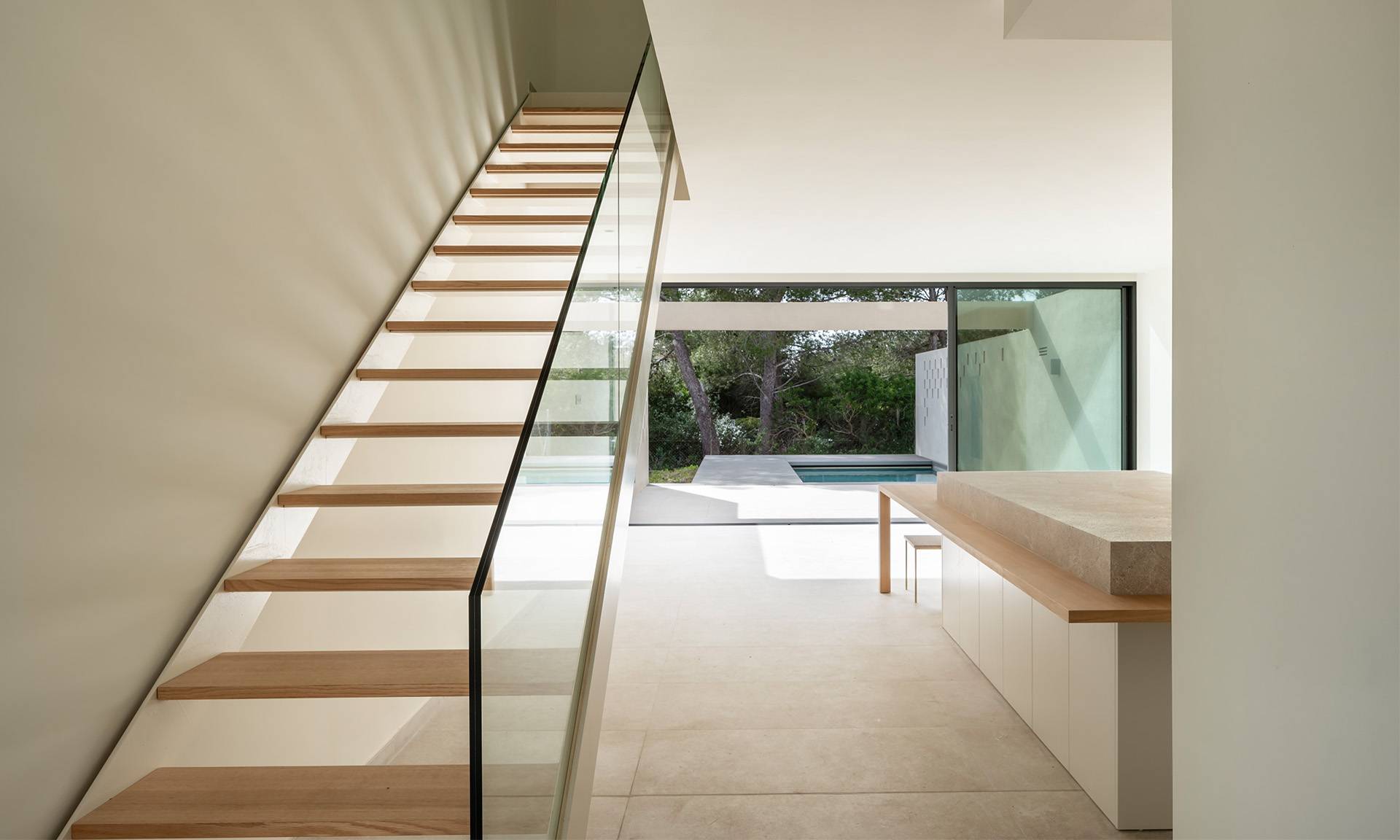
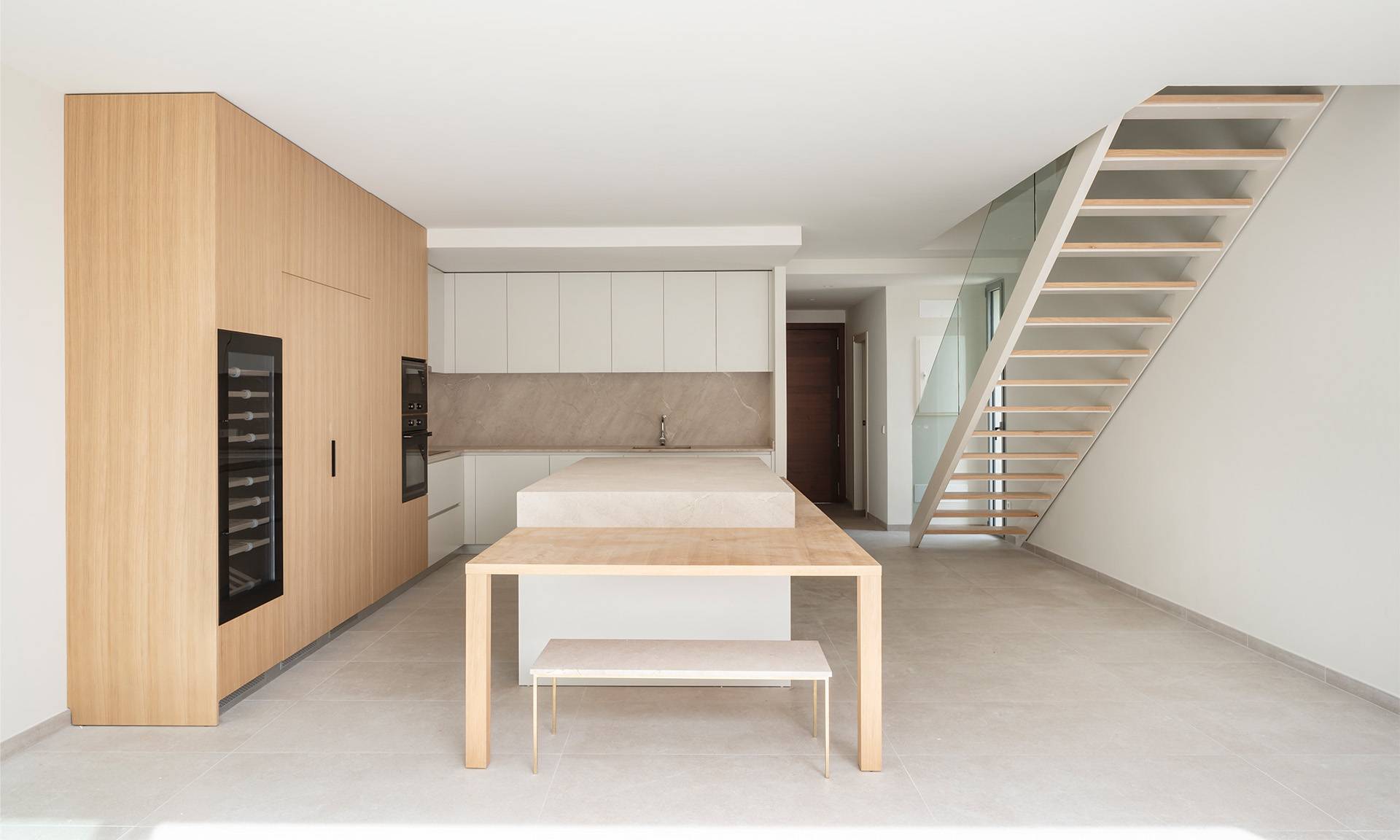
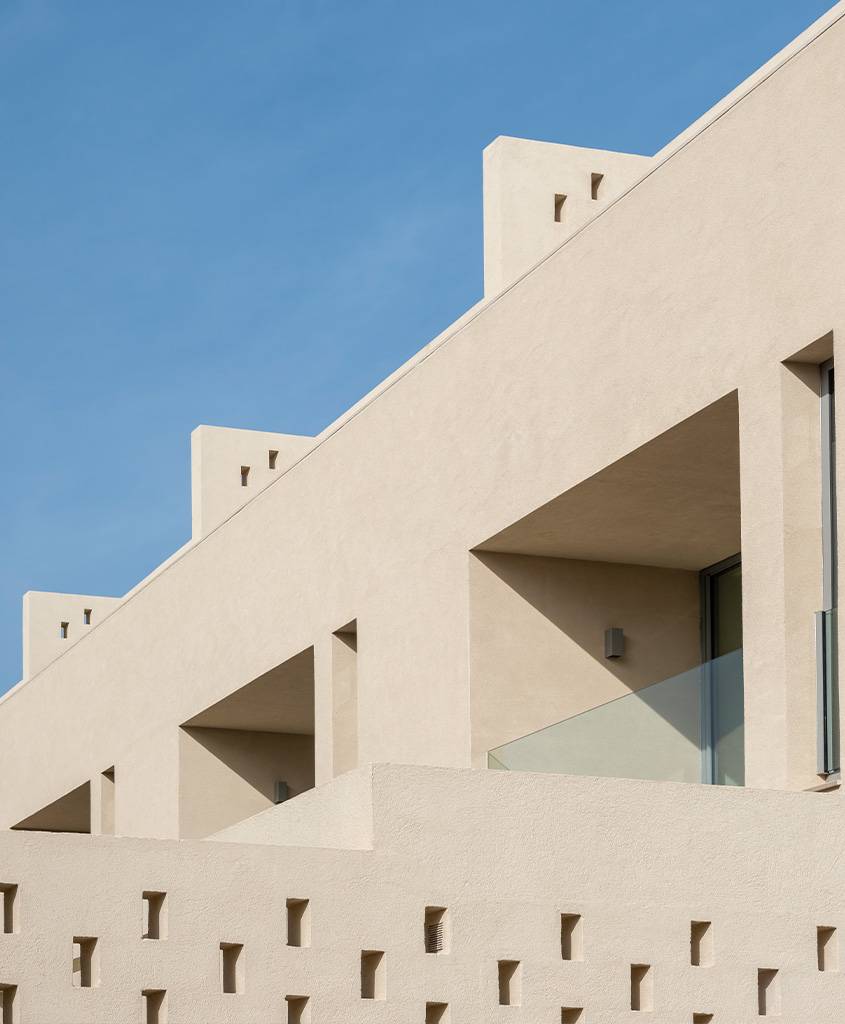
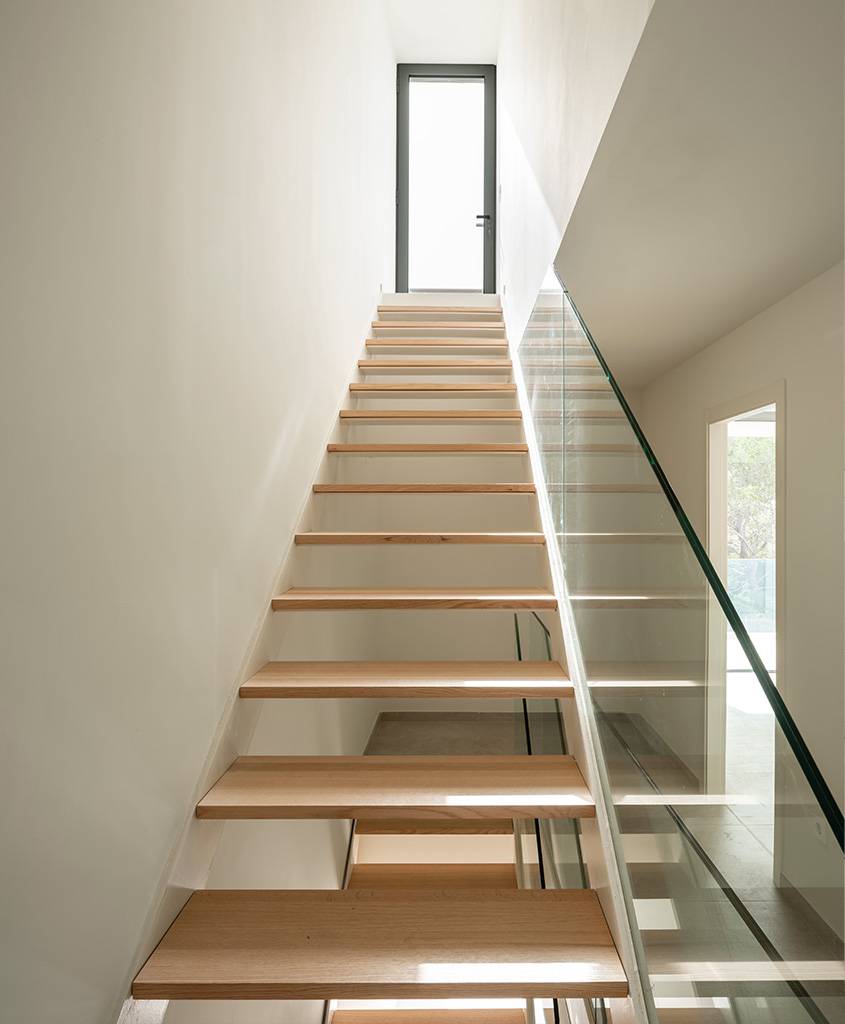
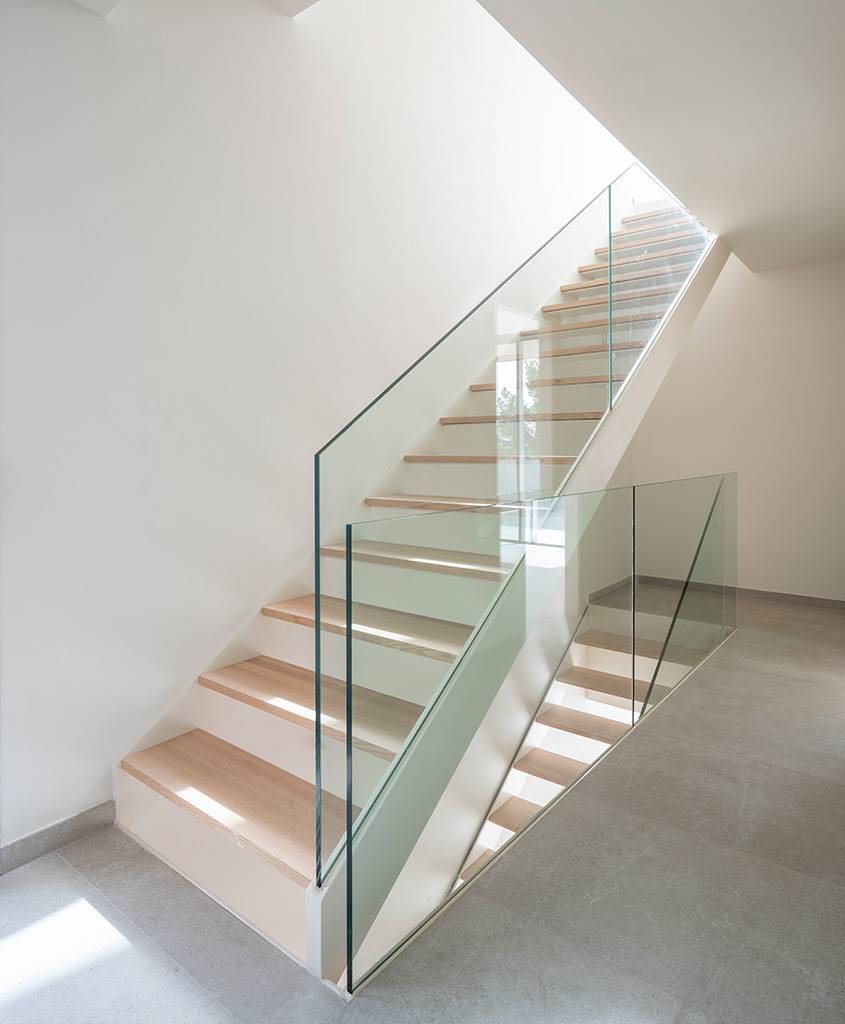
The interior enhances continuous spatial reading. From the entrance, a distribution area connects to the staircase, a bedroom or study, and a guest toilet, while immediately revealing the entirety of the ground floor: kitchen, dining, and living areas open onto the terrace, pergola, pool, and garden. The staircase, light in appearance with a metal structure and wooden steps, acts as a light well, visually connecting levels and providing transparency. The first floor houses two double bedrooms with a shared bathroom and, in some units, a laundry room, as well as a main bedroom with an en-suite bathroom and a south-facing porch. The roof functions as a solarium and viewpoint, opening views towards the mountains and the landscape.
The proximity to the water table prevents the construction of a basement; parking is integrated at ground level, reducing impact by preserving existing trees and incorporating new planting into the overall layout.
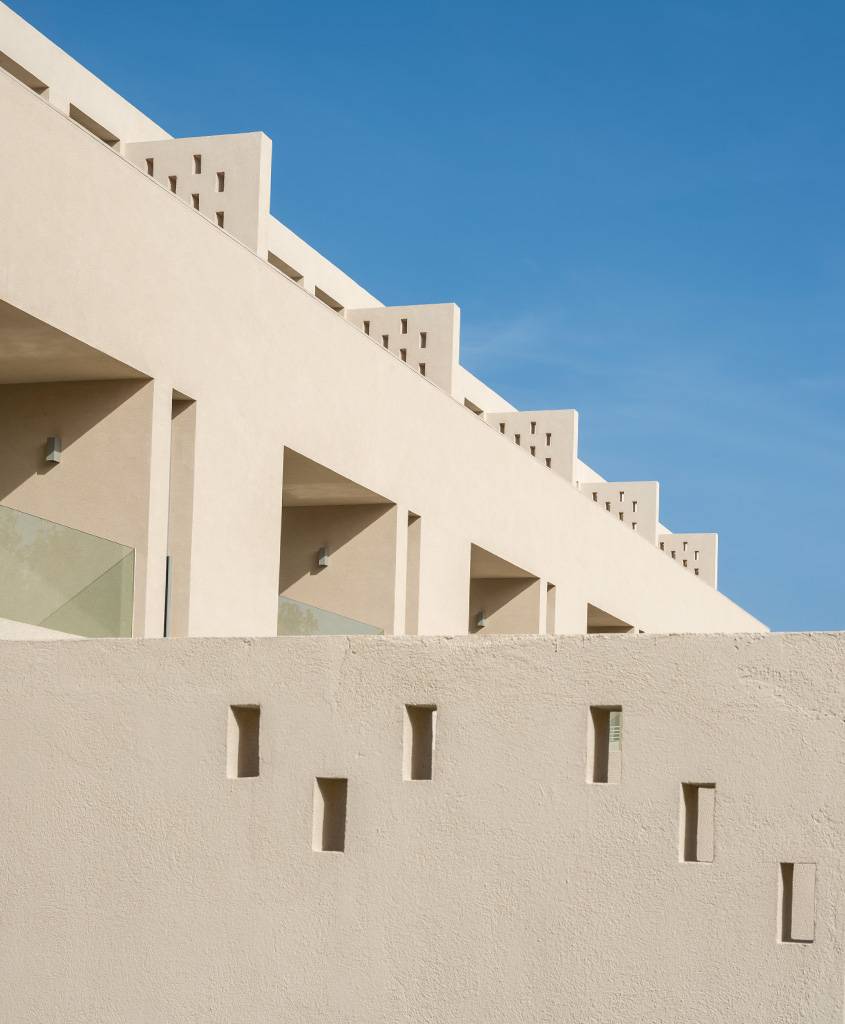
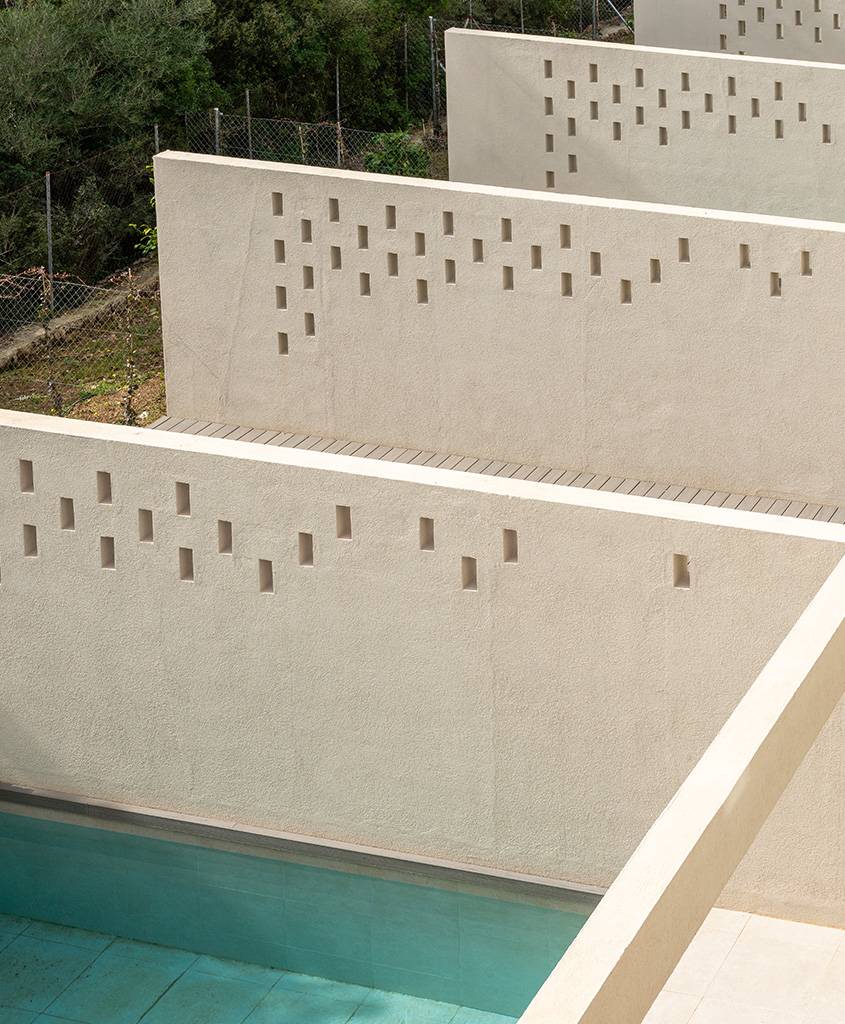
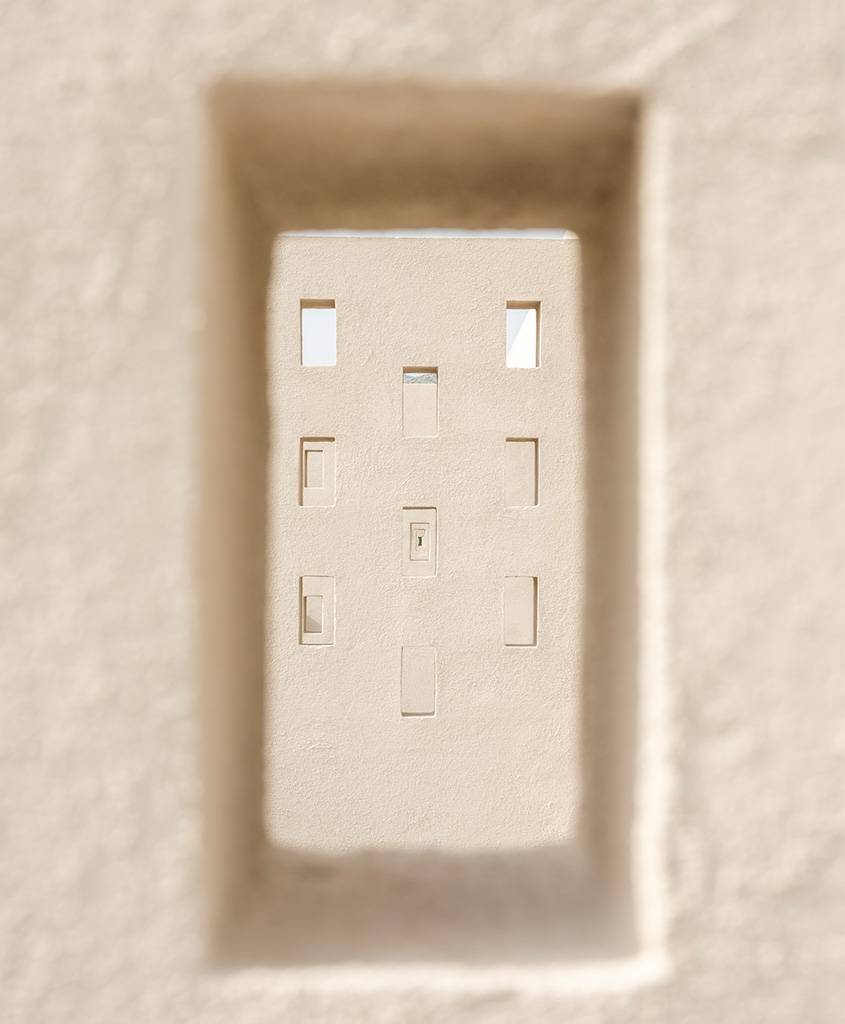
Energy efficiency is based on passive strategies and design decisions: thermal inertia of the structure and enclosing walls, continuous insulated envelope (ETICS), and solar control through shutters, porches, vegetated pergolas, and movable blinds. The south orientation captures solar gains in winter and moderates them in summer. Mechanical ventilation with heat recovery ensures air quality without energy loss. Additionally, proximity to the sea allows the use of the marine breeze (“l’embat”), channelled through lattice walls between patios and dwellings to cool outdoor spaces and create cross ventilation, contributing to overall construction efficiency.
Outdoor space and landscape are conceived as a continuation of the project in Mallorca. The maximum number of pine trees is preserved, and low-water-demand Mediterranean species are introduced: orange and lemon trees in private gardens, olive trees and shade-adapted plants in access areas, and hackberry trees in the parking area, creating shade and arboreal continuity.
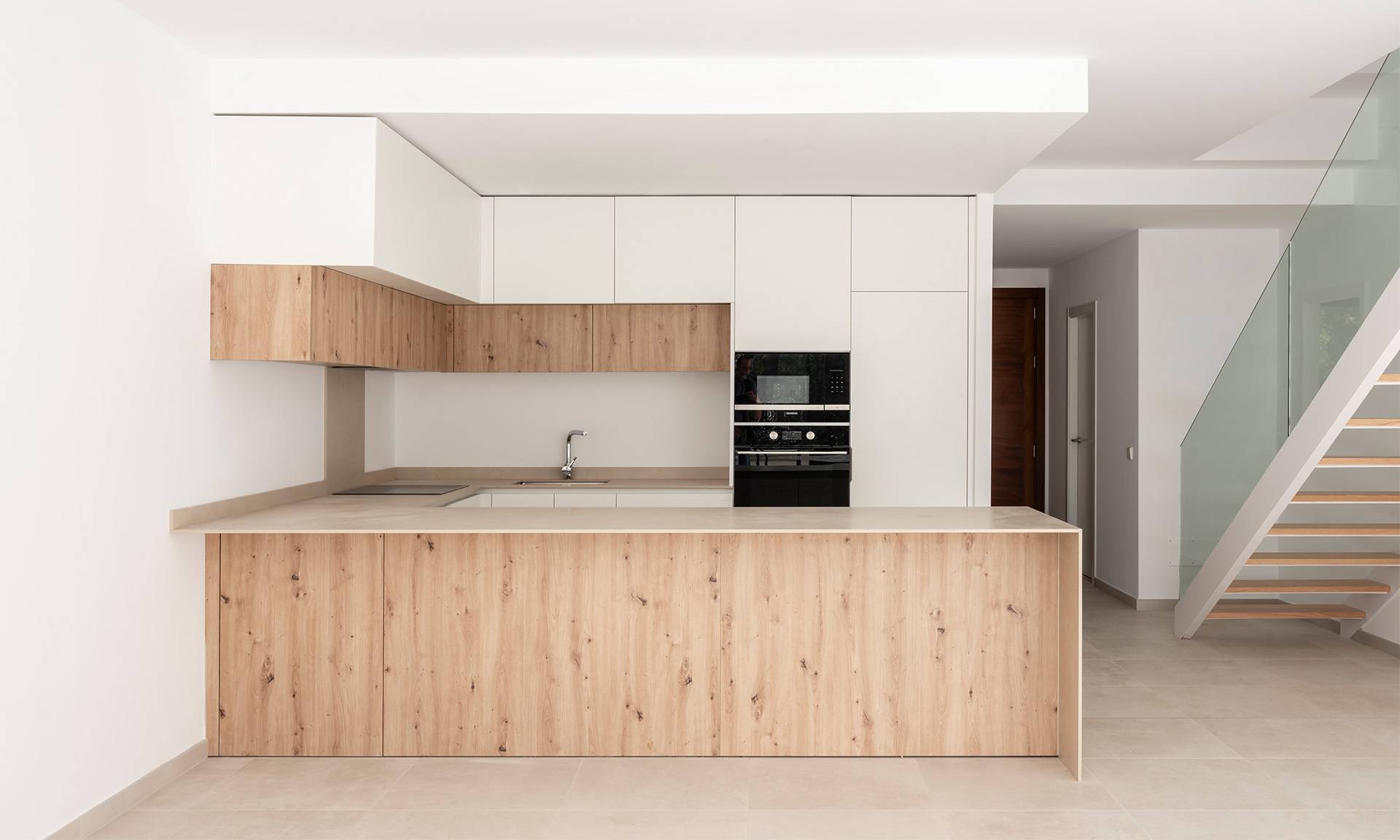
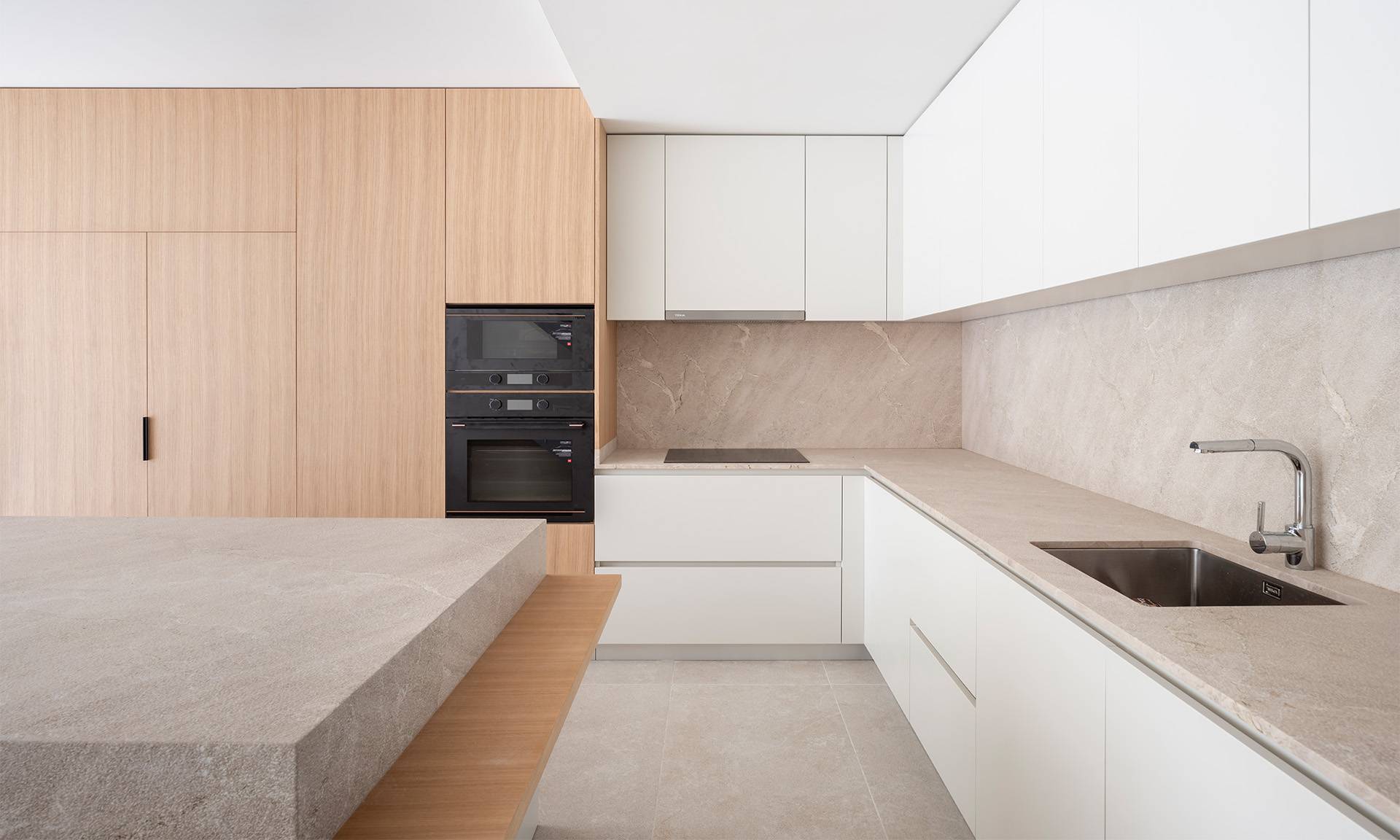
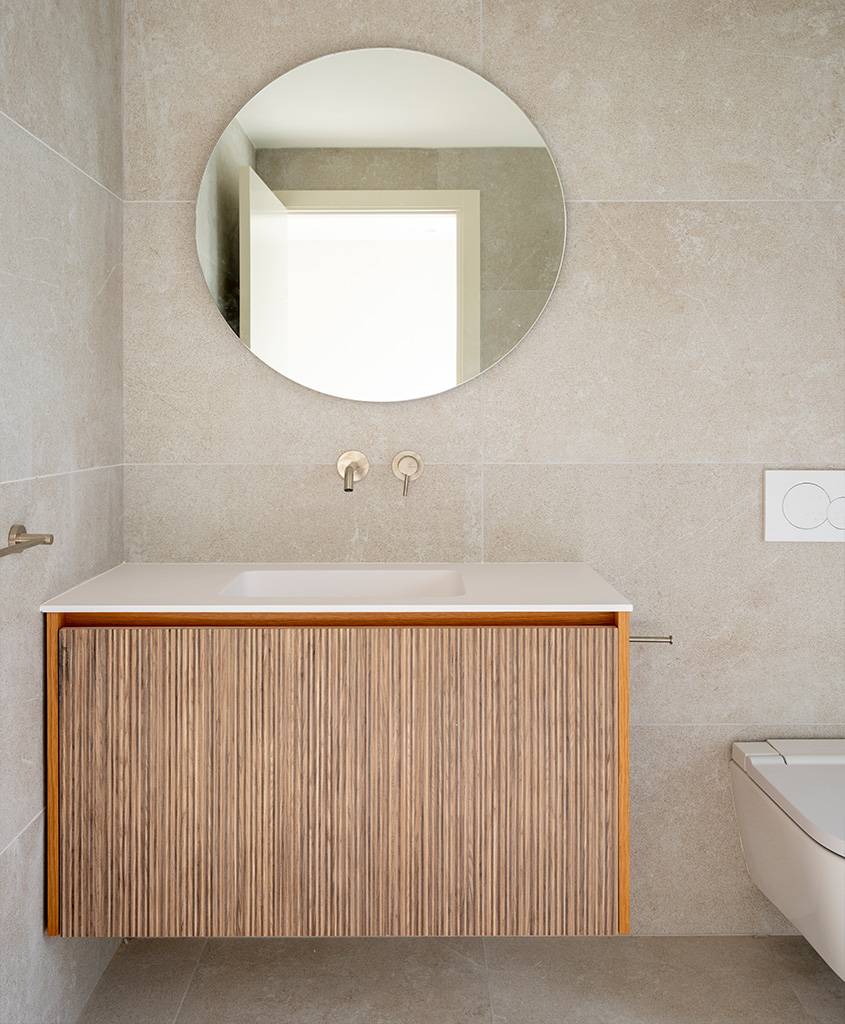
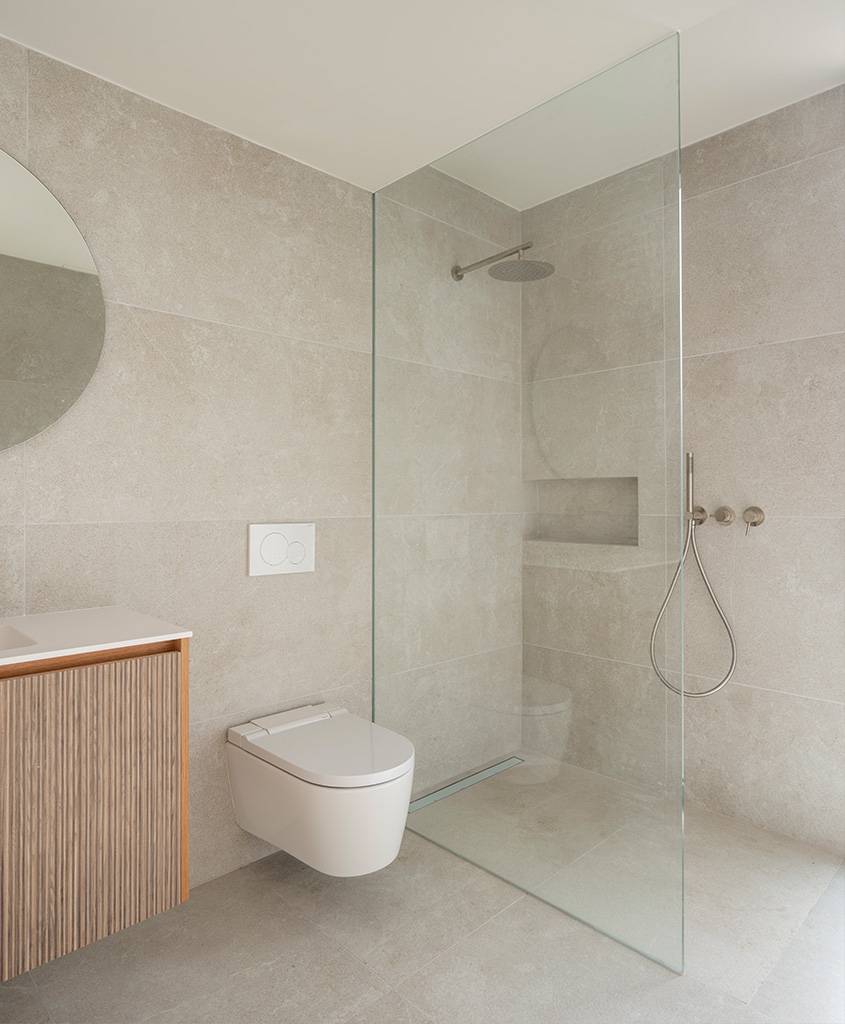
Finally, the project incorporates flexibility for users, allowing customization of elements such as kitchens, bathrooms, and finishes, adapting each dwelling to the preferences of future owners without compromising architectural coherence.
The combination of passive strategies, construction efficiency, natural ventilation, use of sea breeze, and landscape integration results in a highly efficient and sustainable built environment, close to nearly zero energy consumption and with almost negligible CO? emissions, integrating comfort, flexibility, and environmental quality at all project scales.
For us as architects it is important to balance landscape, climate response, and spatial continuity, resulting in a discreet form of spatial luxury based on light and open architecture, and the relationship between interior and exterior.